
Resident Evil 6 is Capcom’s 2012 action-horror blockbuster, first released on PlayStation 3 and Xbox 360 and later on Windows, where Steam lists its release as March 22, 2013. It splits one global bioterror outbreak across four linked campaigns starring Leon, Chris, Jake and Ada. Its scares come less from dread than from scale: mutating J’avo soldiers, a relentless stalker, collapsing cities and zombie-choked streets that bury you in enemies faster than you can count bullets.
Story and setting
The game opens on June 29, 2013, in the fictional American city of Tall Oaks, where U.S. President Adam Benford is about to publicly admit the government’s role in the Raccoon City cover-up. Before he can, a new bioweapon called the C-virus tears through the crowd. Leon S. Kennedy, now a seasoned government agent, finds himself in a university and a cathedral district overrun by the dead, paired with Secret Service agent Helena Harper, who is plainly hiding something. If you’ve followed Leon Kennedy since 1998, his campaign is the one written for you: a dark, rain-slicked return to zombies, flashlights and gothic architecture.
The other three stories radiate outward from that same crisis. Chris Redfield, broken and drinking in an Eastern European bar, is pulled back into the BSAA by his young sharpshooter Piers Nivans and sent to the fictional city of Lanshiang, China. Jake Muller, a mercenary with an unusually valuable bloodline, is tracked down in the war-torn republic of Edonia by agent Sherry Birkin, last seen as a child in Resident Evil 2. Ada Wong’s chapter, unlocked once you’ve cleared the others in the original release and available from the start after a later update, threads through the gaps in all three. The timeline jumps between December 2012 and late June 2013, and you’ll find the campaigns cross paths at set moments, with the player teams briefly fighting the same boss from opposite sides.
That structure is the game’s big idea and its biggest risk. You don’t play one story with four protagonists; you play four short games that only make full sense once you’ve seen how they slot together. The payoff when two campaigns intersect is real, but the entire narrative asks you to commit to the whole package rather than a single protagonist’s arc.
How it scares you
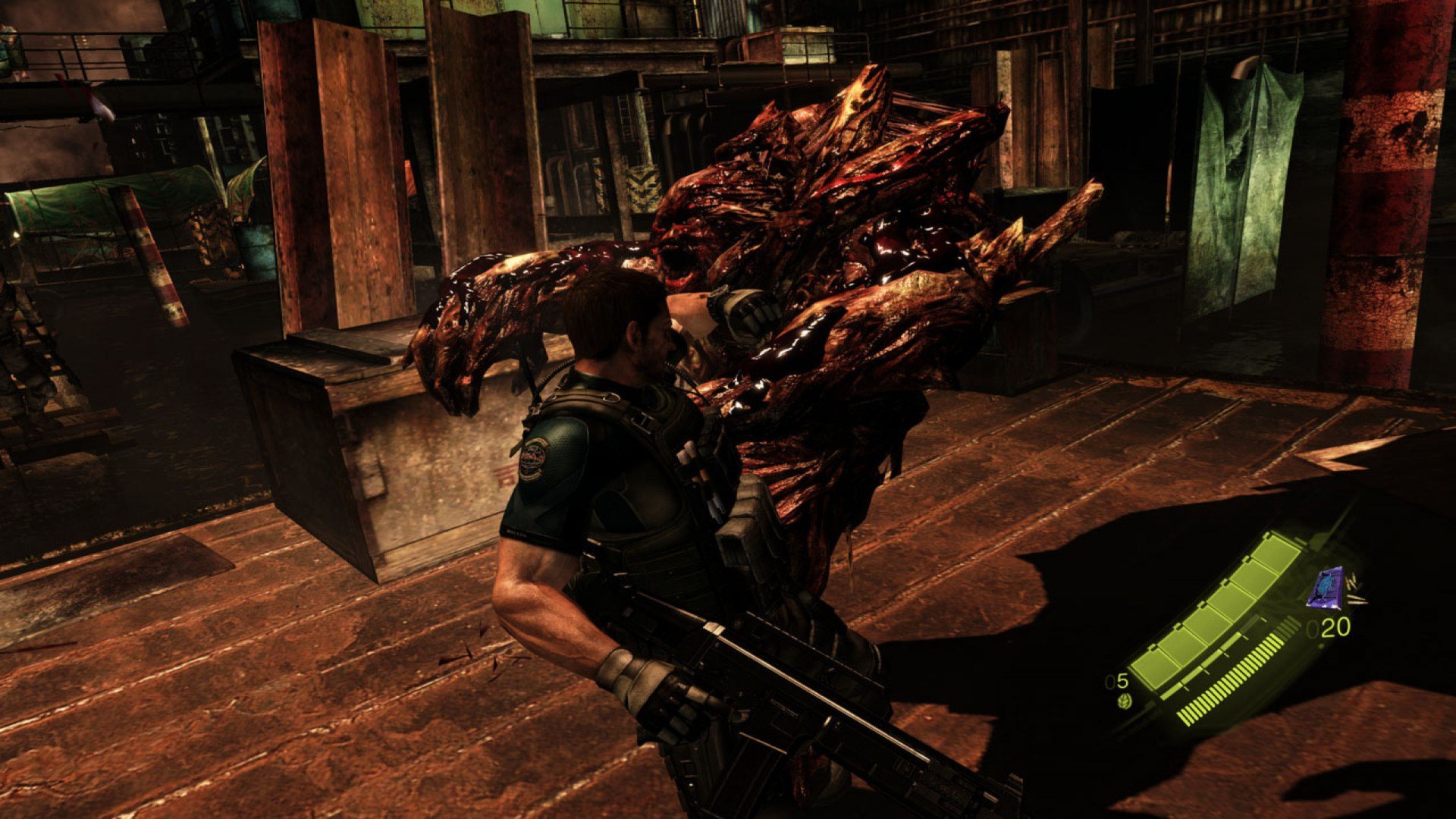
Resident Evil 6 is the most action-heavy main entry in the series, so it helps to be honest about what kind of fear it offers. It almost never wants you to hide. It wants you to move, shoot, slide, roll and melee, and the systems are built around that. You can fire while walking, dive into a prone position, counter enemy attacks with timed strikes, and spend a stamina gauge on brutal physical takedowns. Healing herbs are mixed into tablets stored in a case, and you pop them with a button press mid-fight. Ammunition is plentiful on standard difficulty. The survival-horror tension of rationing every shell is mostly gone.
What replaces it is pressure. Your average enemy is a J’avo, a soldier infected with the C-virus who stays armed, coordinated and capable of speech. Damage one in the wrong spot and that limb mutates on the spot into an insectile wing, a whip of tendons or a shielding carapace, so a fight you thought you understood changes shape every few seconds. Kill a J’avo cleanly and it may cocoon into a chrysalis and hatch something worse. That unpredictability is the closest thing the game has to classic Resident Evil dread: you stop trusting that a body on the floor is finished.
Each campaign tunes the fear differently, and choosing your starting point is the best way to shape your experience.
| Campaign | Main enemies | How it plays | Scare level |
|---|---|---|---|
| Leon and Helena | Classic shambling zombies, early C-virus mutants | Slowest pace, darkest environments, most horror | 3/5 |
| Chris and Piers | Armed J’avo squads, giant B.O.W.s | Cover-based military shooter, vehicle sections | 1/5 |
| Jake and Sherry | The Ustanak stalker, J’avo | Chase sequences, brawling, some stealth | 2/5 |
| Ada | Mixed, plus puzzles | Solo-leaning, more exploration and puzzles | 2/5 |
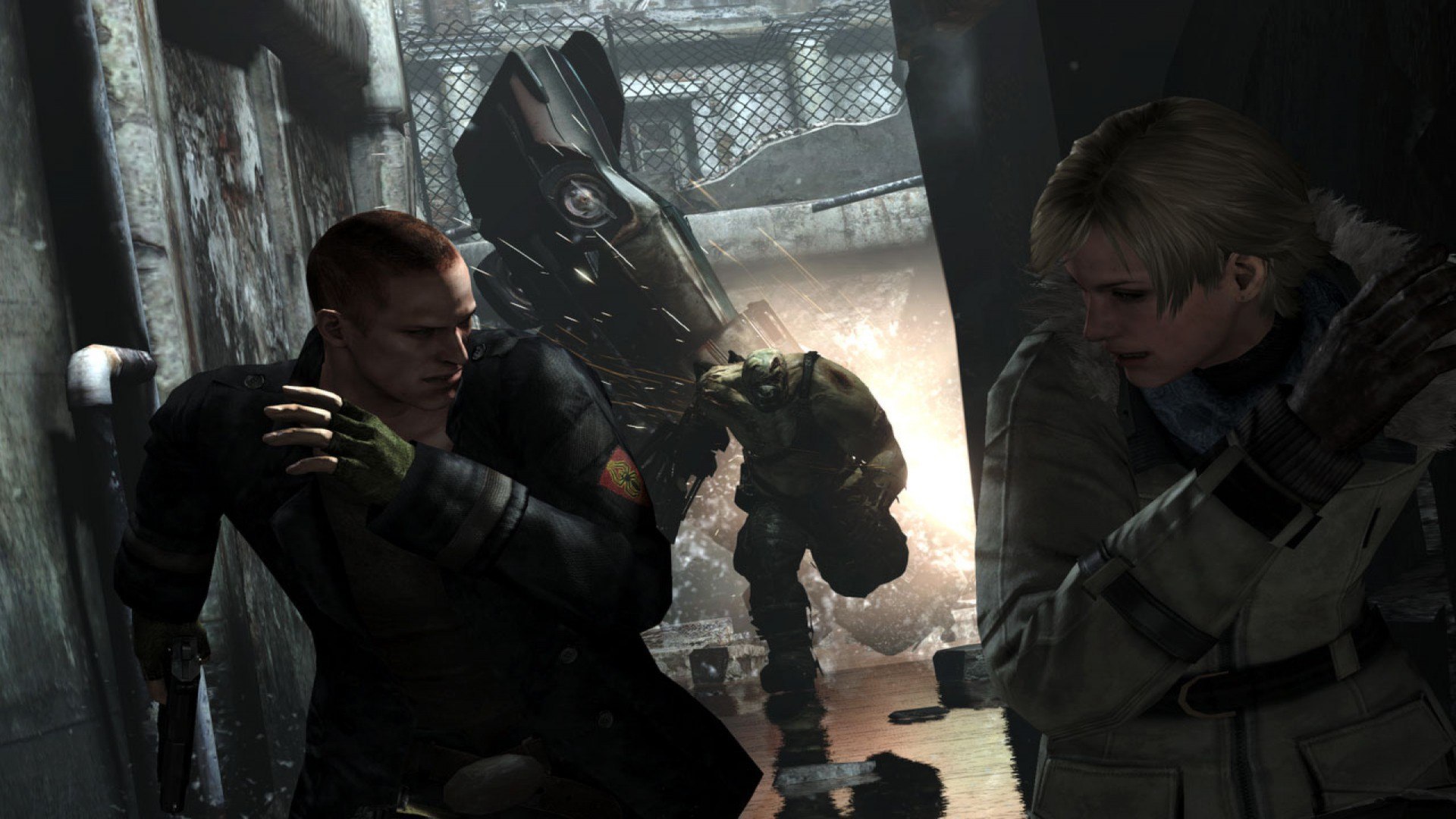
Leon’s opening hours are the strongest horror Resident Evil 6 has. Tall Oaks at night, the cathedral catacombs and a stretch of underground tunnels lean on low light, groaning hordes and zombies that lunge from side rooms. The sound design works hard here, with distant moans, screaming civilians and a score that drops out just before something grabs you. Jake’s campaign borrows the Nemesis formula from Resident Evil 3 through the Ustanak, a hulking pursuer with a mechanical claw who crashes through walls on his schedule rather than yours. Those chase sequences give you the game’s most reliable adrenaline spikes.
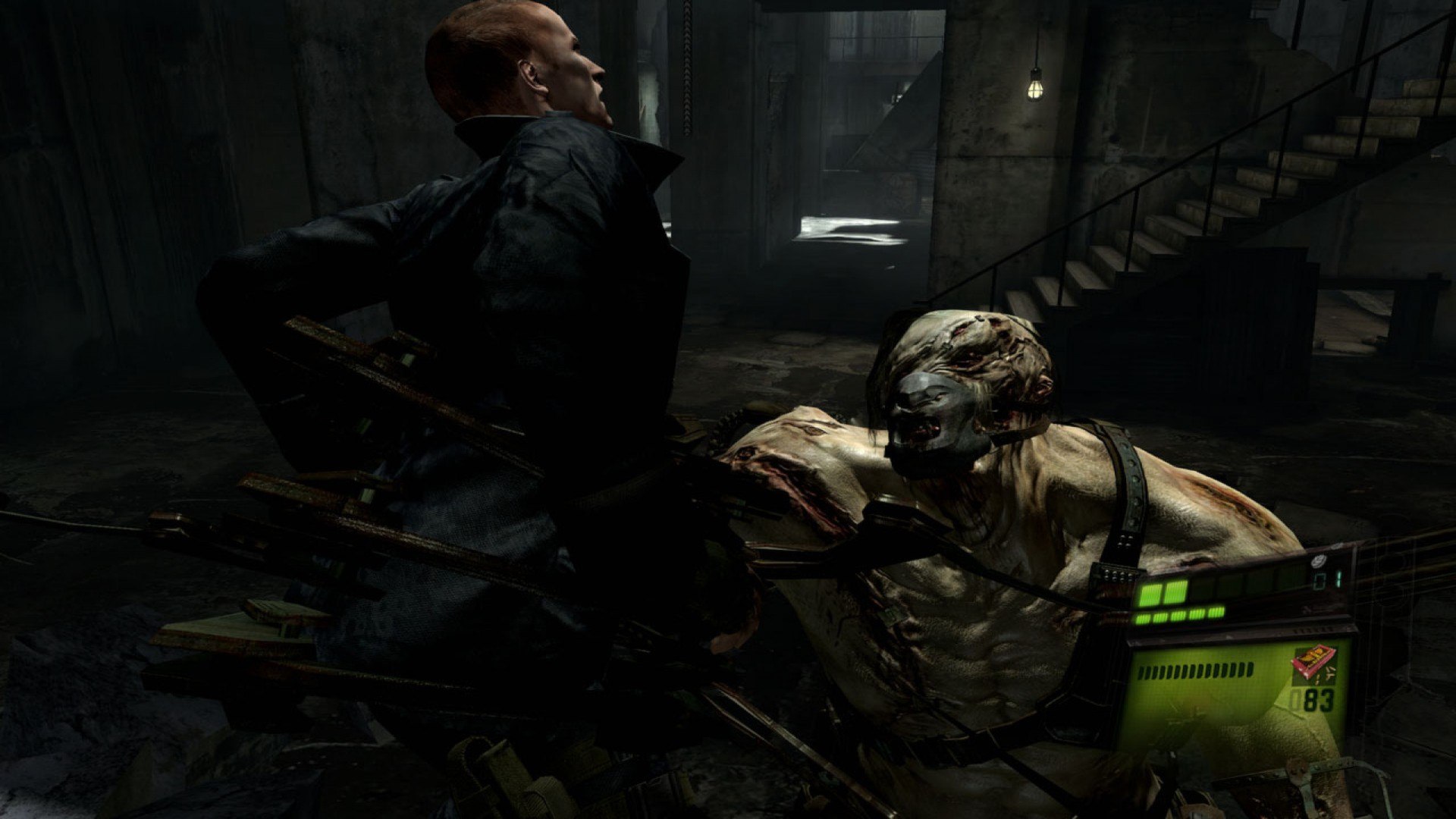
The camera deserves a mention because it shapes the scares. It sits tight over your shoulder, which makes enemies feel close and sudden but also hides threats at the edges of the screen. Quick-time events are frequent, sometimes in the middle of cutscenes, and a missed prompt means a gory death animation. That’s where most of the jump scares come from: less a creature in a mirror, more a mutant grabbing your partner while you hammer a button. If you can’t handle gore, know that dismemberment, impalement and head-bursting mutations are routine.
Lore and ending
Spoiler warning
Everything below spoils all four campaign endings, the main villain and the major character deaths.
The man behind the outbreak is Derek C. Simmons, the U.S. National Security Advisor and the head of a secretive cabal known as The Family, which has steered world events from the shadows for generations. Simmons orchestrated the Tall Oaks attack, including the infection of President Benford, his own longtime friend, because Benford’s planned confession threatened The Family’s secrets. Helena Harper’s guilt in the early chapters comes from Simmons coercing her by holding her sister Deborah, who is later revealed to have been infected and mutated. Leon and Helena eventually corner Simmons in Lanshiang, where his C-virus infection turns him into a series of grotesque forms, and the two campaigns that collide in that city all chip away at him before Leon finishes him with help from Ada. Leon’s ending sees Helena cleared and the pair reporting back to Ingrid Hunnigan.
The Ada Wong the other heroes keep meeting is not always Ada. Simmons, obsessed with her, had a researcher named Carla Radames transformed with the C-virus until she became a near-perfect copy of Ada’s face and body. Carla, consumed by rage at being erased as a person, runs the Neo-Umbrella front that spreads the virus. Ada’s own campaign is the key that unlocks the mystery: she spends her chapters hunting her double, ultimately destroying Carla’s facility and killing the mutated Carla before slipping away into her next contract. If you want the long view of how the real Ada got here, our Ada Wong breakdown tracks her through every game she appears in.
Chris and Piers carry the game’s emotional weight. Chris’s amnesia stems from the Edonia operation, where Carla, wearing Ada’s face, wiped out his squad with a bioweapon. His campaign is about guilt and whether he still deserves to lead. The final confrontation takes place in an underwater facility where Carla birthed Haos, a colossal new B.O.W. Badly wounded, Piers injects himself with the C-virus, mutates an electrically charged arm, kills Haos, and then forces Chris into an escape pod while he stays behind as the base floods. Chris returns to the BSAA with a renewed sense of purpose. It’s one of the few genuinely moving deaths in the series.
Jake’s story ties the game back to the series’ biggest villain. He is the son of Albert Wesker, who died in Resident Evil 5, and his blood carries antibodies against the C-virus, which is why Sherry and every faction in the game want him. After six months in captivity, a final battle against the Ustanak and a supply of blood donated for a vaccine, Jake drops his demand for $50 million and cheekily cuts it to $50, then heads back into the world as a mercenary. The ending gives Jake a quiet redemption and makes Sherry one of the series’ most capable agents.
The broader lore takeaway is that Resident Evil 6 shifts the threat from a single corporation to a global conspiracy. Umbrella is long gone; The Family and the spread of bioweapons on the black market are the new enemy, and the C-virus builds on decades of earlier B.O.W. research.
Where it fits in the series
Resident Evil 6 sits at the end of the action era that began with Resident Evil 4 in 2005 and continued through Resident Evil 5 in 2009. Its mixed reception pushed Capcom to rethink the series entirely, and the next numbered entry, Resident Evil 7 in 2017, swapped to first-person and stripped everything back to a single haunted house in Louisiana. If you’re a Resident Evil 7 fan who never went back to the pre-reboot years, know that 6 is the polar opposite: loud, sprawling and globe-trotting.
| Game | Release year | Story year |
|---|---|---|
| Resident Evil Code Veronica | 2000 | 1998 |
| Resident Evil 4 | 2005 | 2004 |
| Resident Evil 5 | 2009 | 2009 |
| Resident Evil Revelations 2 | 2015 | 2011 |
| Resident Evil 6 | 2012 | 2012 to 2013 |
| Resident Evil 7 | 2017 | 2017 |
| Resident Evil Village | 2021 | 2021 |
The CG film Resident Evil: Vendetta (2017) follows on from 6, reuniting Chris and Leon, while the earlier film Resident Evil: Damnation (2012) puts Leon in Eastern Europe before 6 starts. The spinoff shooter Resident Evil: Operation Raccoon City launched the same year as 6 but sits outside the main canon, so you can skip it for story purposes. The series has since continued with Resident Evil Requiem in 2026.
There is no remake of Resident Evil 6, and Capcom hasn’t announced one. The modern versions are straight ports of the 2012 game with its post-launch content folded in. If you’re new to Resident Evil, don’t start here. Chris’s arc reaches back to his first appearance, which you can experience through the Resident Evil 1 remake, and his bond with his sister is set up in Resident Evil Code Veronica. Sherry’s return means far more once you’ve played Resident Evil 2, and Jake’s parentage only lands if you’ve seen Wesker at his worst in 5. Play 4 and 5 at minimum before you take on 6.
The reputation, revisited
Resident Evil 6 is the series’ most argued-about main entry, and it’s worth being clear about why. Critics in 2012 objected to the shift toward bombastic action, the reliance on quick-time events and the uneven campaign quality; the PC version holds a Metacritic score of 69 on Steam. Fans felt it had forgotten how to be scary.
Those complaints are fair, but they miss what the game does exceptionally well. Its melee and movement systems are the deepest the series has ever had, and players who master counters, quick shots and slide-cancelling find a combat sandbox that still has no real equal in Resident Evil. The Mercenaries mode, which tasks you with racking up kills against a clock, is a genuine high point. Agent Hunt, which lets you invade another player’s campaign as an enemy creature, was a bold idea that worked surprisingly well. Played with a friend, with expectations set to action-horror, Resident Evil 6 is a lot of fun. Played solo while hoping for Resident Evil 2, it disappoints. Know which game you’re buying.
Where to play
You have more options for Resident Evil 6 than for most Capcom horror games of its era.
| Platform | Release | Notes |
|---|---|---|
| PlayStation 3, Xbox 360 | 2012 | Original release |
| Windows (Steam) | March 22, 2013 | Steam price $19.99 as of October 2026 |
| PlayStation 4, Xbox One | 2016 | Includes the post-launch content; plays on PS5 and Xbox Series X/S via backward compatibility |
| Nintendo Switch | 2019 | Portable version with the same content |
The Steam release runs on Windows, supports single-player, co-op and online multiplayer, and carries a 16 age rating on the store page. PC players also get a Left 4 Dead 2 crossover that adds Valve’s survivors to Mercenaries, plus extra modes added after launch. The PS4 and Xbox One versions are the easiest way to play on current console hardware, since they run on PS5 and Xbox Series X/S without a separate upgrade.
Subscription availability changes too often to promise anything. As of October 2026, check the PlayStation Plus Extra and Xbox Game Pass catalogs before you buy, since Capcom’s back catalog rotates in and out. On Steam Deck, check the compatibility badge on the store listing as of October 2026; it’s a lightweight 2013 port that doesn’t demand much from modern hardware.
For Nintendo players, the Switch version is the portable option, and the RE remakes on Switch 2 give you a natural follow-up if you want to see how Capcom modernized the series’ earlier, scarier entries.
If you liked this
Resident Evil 5 (2009): the same co-op action foundation, built around a single campaign, with Chris and Sheva.
Dead Space 2 (2011): set-piece action horror that keeps far more tension and atmosphere than Resident Evil 6.
Resident Evil Revelations 2 (2015): episodic co-op horror set two years before 6, with Claire and Barry.
FAQ
Can you play Resident Evil 6 without playing the earlier games?
You can follow the plot, but you’ll miss a lot. The game assumes you know Leon, Chris, Ada, Sherry and Wesker. Play Resident Evil 4 and 5 first if you want the story to land.
Which campaign should you play first?
Start with Leon’s. It’s the most traditional horror chapter and introduces the outbreak properly. Then do Chris and Jake in either order, and save Ada’s for last, since it reveals the twist that ties the others together.
How long is Resident Evil 6?
The four campaigns together take about 21 hours for most players, with each one running roughly five to six hours. Mercenaries and the other modes add plenty more.
Is Resident Evil 6 scary?
Rarely. Leon’s campaign has genuine creepy stretches, and the Ustanak chases are tense, but this is an action game first. We rate it 2/5 overall for scares, with heavy gore and frequent jump scares from quick-time events.
Does Resident Evil 6 have co-op?
Yes. Every campaign supports two-player co-op, and it’s the best way to play. The Steam version supports co-op and online multiplayer, including the Agent Hunt mode where players invade campaigns as enemies.