

Yes, the first Resident Evil was remade. Capcom rebuilt the 1996 PlayStation game from the ground up for the Nintendo GameCube in 2002 under original director Shinji Mikami. That remake is the one sold today as Resident Evil HD Remaster on PS4, Xbox One, Switch and PC. Below we compare every major version of the first game, list what actually changed, and say which one we recommend for your first trip into the Spencer Mansion.
Why the RE 1 remake causes so much confusion
The naming is a mess. Capcom has never sold the 2002 game under a title like “Resident Evil 1 Remake.” On the GameCube box it was simply called Resident Evil, which is the same name the 1996 original carried in the West. In Japan both are Biohazard. Fans started calling the 2002 version “REmake” to tell them apart, and that nickname is why searches for re remake, re1 remake and resident evil 1 remake all point at the same game.
The 2015 release adds another layer. Resident Evil HD Remaster is a remaster of the 2002 remake, not of the 1996 original. When people search for “resident evil 1 remastered,” the 2015 HD port is almost always what they want. The modern RE Engine remakes of Resident Evil 2 (2019), Resident Evil 3 (2020) and Resident Evil 4 (2023) add a final twist: newer fans assume a fourth RE Engine remake of the first game must exist. It does not. Capcom has not announced one.
The short version:
- Resident Evil (1996): the original PlayStation game, later ported and re-released several times.
- Resident Evil (2002): a full remake for GameCube, with new graphics, areas, enemies and script.
- Resident Evil HD Remaster (2014 in Japan, 2015 worldwide): the 2002 remake in high definition for modern platforms.
Every version of the first Resident Evil, in release order
The table below covers the major releases of the first game we can place with confidence. Re-releases of the same build on digital storefronts are left out, and so are mobile and minor regional variants.
| Release | Year | Platform(s) | Developer | What it is |
|---|---|---|---|---|
| Resident Evil (Biohazard) | 1996 | PlayStation | Capcom | The original, directed by Shinji Mikami |
| Resident Evil (PC) | 1996–1997 | Windows | Capcom | Port with an uncensored color intro and extra unlockables |
| Resident Evil (Saturn) | 1997 | Sega Saturn | Capcom | Port with a bonus Battle Game mode |
| Resident Evil: Director’s Cut | 1997 | PlayStation | Capcom | Adds Beginner and an Advanced (arranged) mode |
| Director’s Cut Dual Shock Ver. | 1998 | PlayStation | Capcom | Adds analog and rumble support plus a new score |
| Resident Evil (remake) | 2002 | GameCube | Capcom Production Studio 4 | Full remake, directed by Mikami |
| Resident Evil: Deadly Silence | 2006 | Nintendo DS | Capcom | Original game plus a touch-screen “Rebirth” mode |
| Resident Evil (Wii) | 2008–2009 | Wii | Capcom | Port of the 2002 remake |
| Resident Evil HD Remaster | 2014–2015 | PS3, PS4, Xbox 360, Xbox One, PC | Capcom | HD remaster of the 2002 remake |
| Resident Evil HD Remaster (Switch) | 2019 | Nintendo Switch | Capcom | Switch port of the HD Remaster |
The Dual Shock Ver. score has its own odd footnote. It was credited to composer Mamoru Samuragochi, and in 2014 it came out that Takashi Niigaki had ghostwritten his work. That scandal is why so many fans treat the 1996 and 1997 soundtracks as the “real” RE1 music.
The 1996 original: what it still does better
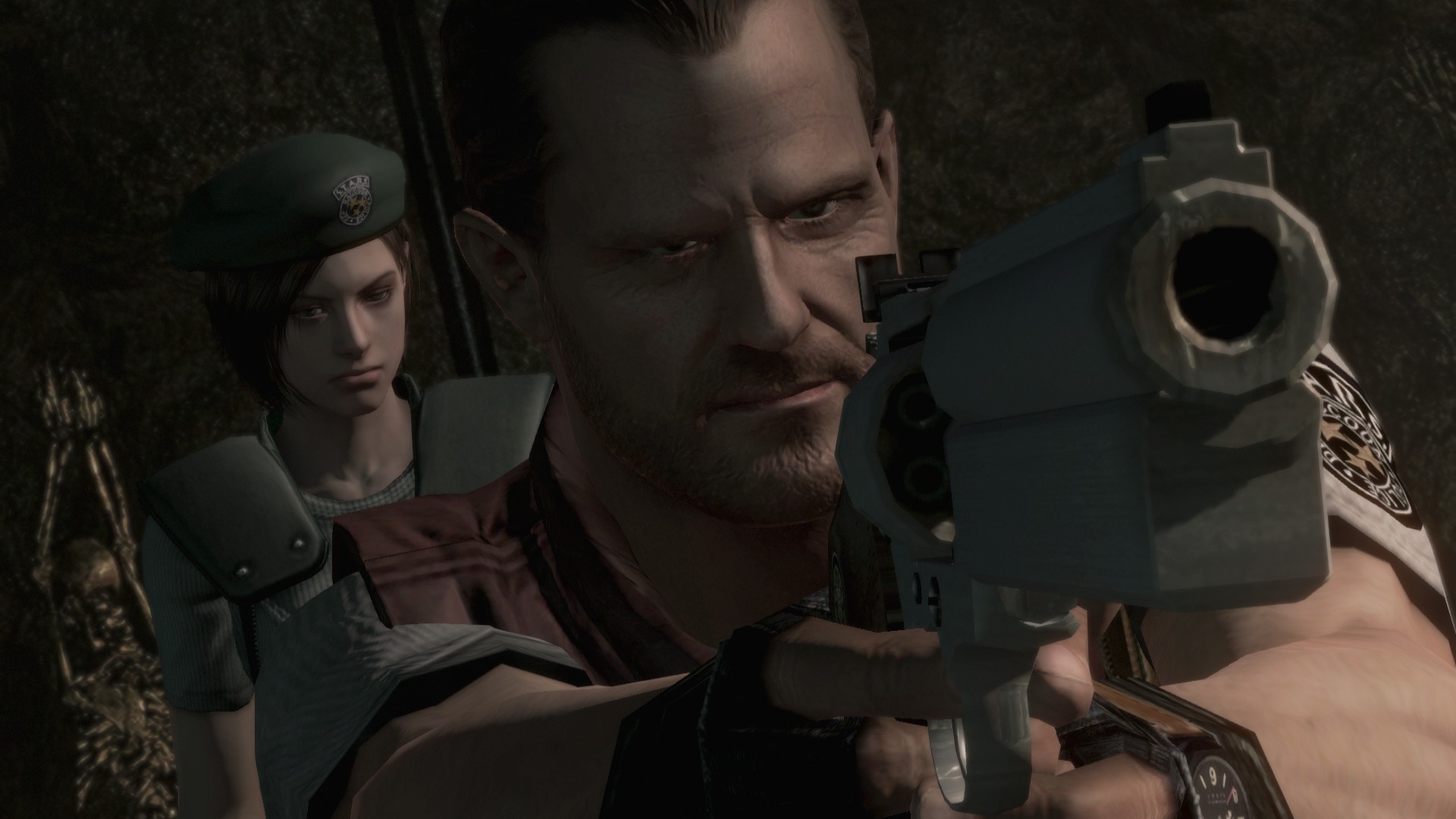
The 1996 game is Capcom’s blueprint for survival horror. You pick Chris Redfield or Jill Valentine of S.T.A.R.S. Alpha Team, and the team gets stranded in a mansion in the Arklay Mountains outside Raccoon City while searching for the missing Bravo Team. From there you work through the mansion, a guardhouse, underground caves and a hidden lab. It uses pre-rendered backgrounds, fixed camera angles, tank controls, limited ink ribbons for saving and item boxes, and every entry since owes something to that loop.
We still think the original has real charm that the remake erased. The live-action intro, the stilted English voice acting and Barry Burton’s legendary “Jill sandwich” line have become a cultural shorthand for 90s game camp. The first zombie turning its head over its shoulder in that hallway is one of the most famous scares in gaming, and it still lands. Some of the low-poly monsters, particularly the dogs crashing through the window, feel more abrupt and aggressive than their polished 2002 versions.
Being honest with ourselves, though, the original is now more of a history lesson than a horror experience for most players. It lacks a quick turn, the controls are stiffer than the remake’s, and the acting kills tension in most cutscenes. We recommend it to series completionists, to retro collectors and to anyone who wants to see where the genre’s grammar came from. We do not recommend it as anyone’s first Resident Evil.
The 2002 GameCube remake: a full rebuild
The remake came from Capcom Production Studio 4 as part of Capcom’s exclusive deal with Nintendo for the GameCube in that era. It launched in Japan on March 22, 2002, six years to the day after the original, and in North America on April 30, 2002. Mikami returned to direct, and the result is the rare remake that is both faithful and much stronger than its source.
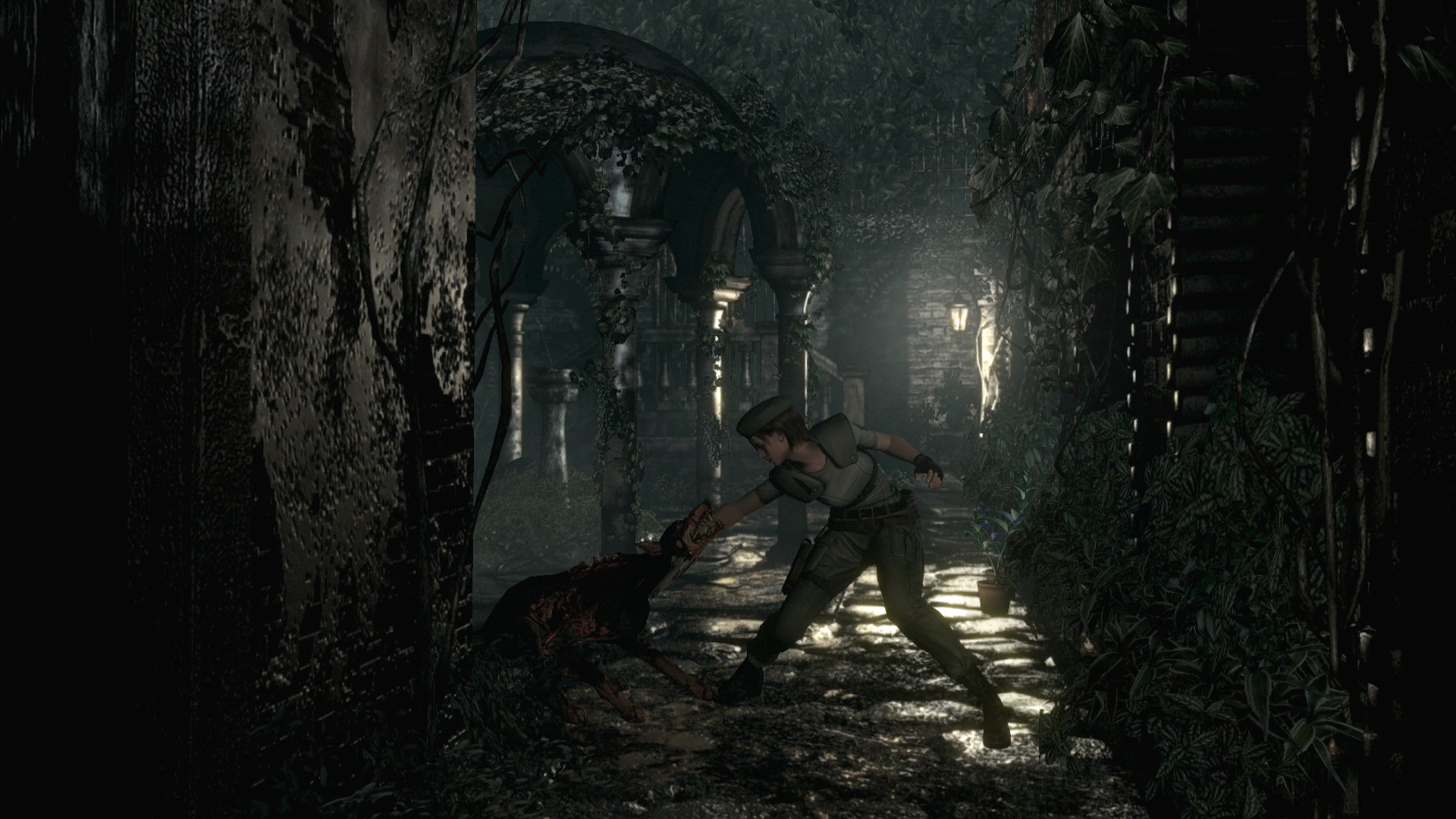
The skeleton is the same: the same characters, the same mansion-to-lab structure, the same puzzles in broad strokes. Almost everything on top of that skeleton is new. The backgrounds are lavishly detailed pre-rendered scenes full of animated light, rain and shadow. The script was rewritten and recast. Puzzle solutions moved, rooms were redesigned, and veterans of the 1996 game walk into familiar hallways expecting one thing and get another. That subversion is deliberate, and we think it is the remake’s best trick.
The scare level goes up noticeably. Darker rooms, better sound design and the new Crimson Head mechanic (explained below) turn the mansion into a place you never feel finished with. Choose this one if you want slow-burn dread over action. Skip it only if fixed cameras and limited saves are a dealbreaker for you.
Original vs remake: 10 changes that matter
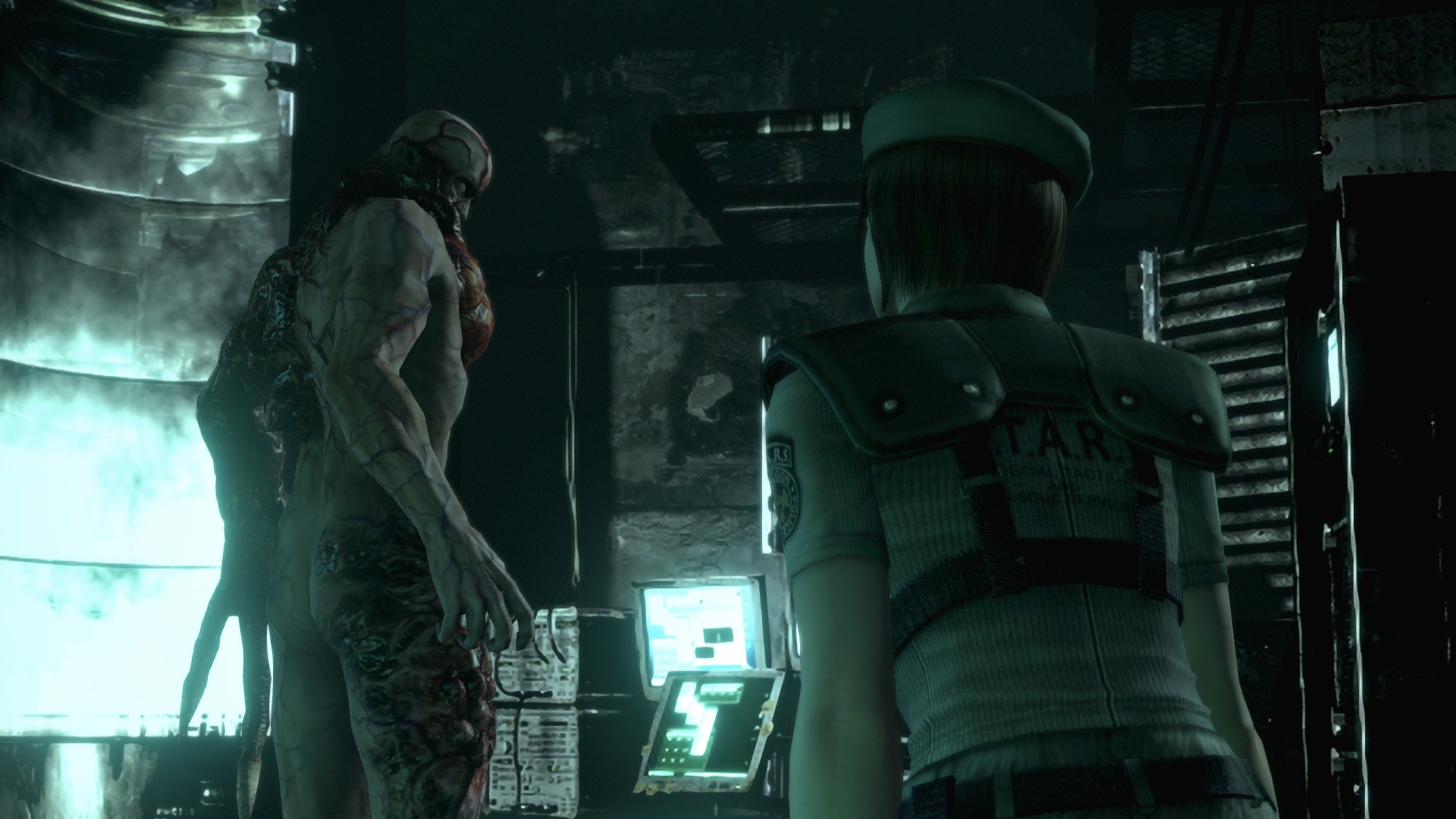
Below is a side-by-side of the systems that change how the game plays, followed by the ten changes we consider the most significant. None of these spoil the story.
| Feature | 1996 original | 2002 remake / HD Remaster |
|---|---|---|
| Visuals | Low-poly characters, low-res backgrounds | Detailed pre-rendered backgrounds with animated lighting |
| Intro | Live-action FMV | CG cutscenes |
| Voice acting | Infamously stilted | Re-recorded, rewritten script |
| Quick turn | No | Yes |
| Defense items | None | Daggers, flash grenades and, for Jill, a stun gun |
| Defeated zombies | Stay dead | Can return as Crimson Heads |
| Map | Mansion, guardhouse, caves, lab | Same, plus forest path, graveyard, cabin and expanded areas |
| New characters | None | Lisa Trevor and the Trevor family files |
| Saving | Ink ribbons at typewriters | Ink ribbons at typewriters |
| Inventory | Chris 6 slots, Jill 8 | Chris 6 slots, Jill 8 |
1. Crimson Heads
This is the change everyone remembers. In the remake, a zombie you kill can come back later as a Crimson Head: faster, clawed, red-skinned and far more dangerous. To stop that you either destroy the head (a well-timed shotgun blast does it) or burn the body with kerosene and a lighter, and kerosene is limited. Every corpse turns into a resource decision. It is the single biggest reason the remake feels tenser than the original.
2. Defense items
Zombies and other enemies grab you in both versions, but the remake lets you fight back. Daggers can be jammed into an attacker, flash grenades can be shoved into a zombie’s mouth and detonated, and Jill can use a stun gun. They are limited, so they act more like a second health bar than a weapon. They also shift the remake’s pace: you can risk running through tight corridors if you have a dagger equipped.
3. Quick turn
The 180-degree quick turn arrived with Resident Evil 3: Nemesis (1999), and the remake adopted it. It sounds minor until you return to the 1996 game and spend three seconds pivoting while a Hunter closes the distance.
4. Expanded map
The remake adds a forest path, a graveyard with a crypt, a cabin in the woods and reworked underground sections. Some of these give you new ways around the mansion, and the cabin in particular is one of the most unsettling spaces Capcom made in the fixed-camera era.
5. Lisa Trevor
The remake’s biggest story addition is Lisa Trevor, a tragic figure tied to the mansion’s architect, George Trevor. She shows up as a recurring, nearly unkillable threat, and the files you find about her family are some of the series’ best environmental writing. We cover what her story means in the spoiler section further down.
6. Rewritten script and new voice cast
Gone are “master of unlocking” and the Jill sandwich. The 2002 script is played straight, and the actors sell it. Purists who loved the camp miss it. We prefer the rewrite, because the horror finally gets to be scary in cutscenes too.
7. Moved puzzles and items
Many puzzles were changed or relocated specifically to trip up veterans. A key you remember finding in one room might be elsewhere, and some old solutions no longer work. The remake keeps the original’s major beats (the V-Jolt solution for Plant 42 is still there) while making sure muscle memory doesn’t carry you through.
8. Bosses and monsters
Familiar bosses return, including Yawn the giant snake, the Black Tiger spider, Plant 42 and the Tyrant, but with new staging. Lisa adds a recurring threat the original never had, and the regular zombies are slower but much harder to put down for good.
9. Lighting and sound as gameplay
The original’s rooms are evenly lit. The remake uses darkness, lightning flashes, creaking floors and distant footsteps as part of the scares, so you often hear an enemy before the fixed camera shows it. That is a craft upgrade that stats tables do not capture.
10. Bonus modes and unlockables
The remake rewards replays with harder modes such as Real Survivor, Invisible Enemy and One Dangerous Zombie, along with unlockable costumes and weapons. The original’s Director’s Cut offered its own Advanced mode with rearranged items, but the remake’s extras run deeper.
Resident Evil HD Remaster: the RE 1 remake on PS4, PC and modern consoles
Resident Evil HD Remaster is the version of the 2002 game most people should play now. It launched digitally worldwide on January 20, 2015, following a Japanese release in late 2014, and it was a major digital hit for Capcom at launch. It came to Switch on May 21, 2019.
Content is the same as the GameCube game, with several modern features layered on:
- Widescreen support. The original 4:3 framing is still available, while the 16:9 option crops the scene and pans the camera to follow you.
- Upscaled backgrounds and new character models. The pre-rendered rooms were remastered for HD resolutions, and some look sharper than others, since the source art was never meant to be blown up this far.
- Alternative modern controls. You can move in the direction you push the stick instead of using tank controls. Purists stick with tank controls because the fixed camera angles were designed for them, but the modern scheme makes the game much friendlier to newcomers.
- A Very Easy difficulty. It suits players who want to see the story without managing scarce ammo.
- New costumes. Chris and Jill get outfits that nod to Resident Evil 5 alongside the classic unlockables.
On PS4 the HD Remaster was also sold physically alongside Resident Evil 0 HD Remaster in the Resident Evil Origins Collection in 2016. Both games also run on PS5 and Xbox Series X|S through backward compatibility, so the resident evil 1 remake on PS4 is effectively the PS5 version too.
Resident Evil 1 remake on PC
There was no PC version of the 2002 remake until the HD Remaster. If you search for resident evil 1: remake pc, the Steam release titled simply “Resident Evil” (with the “biohazard HD REMASTER” branding on its store art) is the one you want. Its list price on Steam is $19.99, and it is discounted often enough that waiting for a sale is sensible; that is why the “Save 75%” store page keeps turning up in search results.
Performance on PC is modest. The game is a 2015 port of a 2002 design, so almost any modern machine, including handheld PCs, runs it comfortably. The settings menu covers resolution, aspect ratio and the control scheme. The game uses Steam for its online services, and like many Capcom PC ports, it can need a fullscreen or refresh-rate tweak in its graphics preferences on high-refresh monitors. We recommend steering clear of unofficial patches or third-party downloads that claim to “fix” the port, since they can carry malware and none of them are necessary to finish the game.
Where to play each version today
| Version | Best current way to play | Notes |
|---|---|---|
| 1996 original | GOG (1996 PC version, added in 2024) | DRM-free, patched for modern Windows |
| 1996 original | Original PlayStation discs on PS1/PS2 | Director’s Cut Dual Shock Ver. is the most complete PS1 build |
| 1996 original | Nintendo DS (Deadly Silence) | Original game plus touch-screen Rebirth mode |
| 2002 remake | GameCube or Wii discs | The most authentic way to play, with 480p over component on GameCube |
| HD Remaster | PS4 (plays on PS5) | Also in the Origins Collection with RE0 |
| HD Remaster | Xbox One (plays on Series X | S) |
| HD Remaster | PC via Steam | $19.99 list price, frequent sales |
| HD Remaster | Nintendo Switch | Runs well, portable |
Capcom’s modern platform attention has been on its RE Engine remakes, and we track the RE remakes on Switch 2 in their own coverage, which the 2002 remake is not part of. For anyone who wants the first game on current hardware, the HD Remaster remains the answer across every major platform.
Story differences between the original and the remake
Spoiler warning
This section spoils Lisa Trevor’s story, Wesker’s betrayal and how both versions of Resident Evil end.
In broad strokes the plot is the same in both versions. Albert Wesker, the S.T.A.R.S. captain, is revealed as an Umbrella double agent who led his team into the mansion to gather combat data on the company’s bioweapons. He releases the Tyrant, is apparently killed by it, and the surviving team members trigger the lab’s self-destruct and escape on Brad Vickers’ helicopter. Your ending depends on which partners you save (Barry or Rebecca, depending on your character) and on surviving the final Tyrant fight on the helipad.
The remake keeps that spine and adds meaningful depth around it. Lisa Trevor’s files reveal that Umbrella used the architect’s family as test subjects after George Trevor finished building the mansion, and that Lisa was experimented on for decades until she became the thing stalking you. Her story ties into Umbrella’s origins and later research, and her encounter during the climax, where she confronts Wesker’s plan, is one of the remake’s standout additions.
The remake also leans harder into foreshadowing Wesker’s survival. In the original, his apparent death sits cleanly at the end, and his return is a retcon handled years later in Resident Evil Code: Veronica (2000). The remake, made after Code: Veronica, tweaks his scenes so his comeback feels planned, and our Resident Evil Code Veronica X guide covers how that return actually plays out. Barry’s arc, where Wesker blackmails him by threatening his family, is handled with more weight in the remake’s script too.
Neither version features Leon S. Kennedy or Ada Wong. Both arrive in Resident Evil 2 (1998), set a few months later in Raccoon City.
Which version should you play first?
We recommend the HD Remaster for nearly everyone. It is the best-designed version of the first game, it is available on every current platform, and its modern controls and Very Easy mode remove the biggest barriers for new players without changing the content. Expect a slow, methodical scare rather than constant action, so plan for a few evenings and play with the lights off.
Pick the 2002 GameCube version if you collect physical media or prefer the remake’s original presentation over the HD upscaling. The GameCube disc running over component at 480p still looks wonderful, and the original 4:3 framing shows every room exactly as Mikami’s team composed it.
Pick the 1996 original if you have already finished the remake and want to see where it all began. Playing the two back to back is one of the best ways we know to appreciate what the remake team did, since every changed room tells you something about what they were trying to fix.
For a first Resident Evil game of any kind, the HD Remaster is a demanding but rewarding pick. Players who struggle with limited saves and fixed cameras may find the 2019 Resident Evil 2 remake a gentler entry point before going back to the mansion.
If you liked this
Resident Evil 0 HD Remaster (2016): a prequel set right before the mansion, with the same pre-rendered style and a partner-swapping system.
Resident Evil 2 (2019): the closest thing to the GameCube remake’s dread in a modern over-the-shoulder game.
Resident Evil Code: Veronica X (2001): the follow-up to the Wesker thread, still in fixed-camera style.
Is a new RE Engine remake of RE1 coming?
Nothing is official. Capcom has not announced a new remake of the first game, and its confirmed upcoming project is Resident Evil Requiem, the next mainline entry, set for February 27, 2026. Claims that an RE Engine remake of the first game (or of Resident Evil 0) is in development have come from anonymous insiders and leakers with mixed track records. Some of those voices called earlier remakes correctly, and others have had release windows and details wrong. We treat any RE1 remake chatter as unconfirmed rumor until Capcom shows something.
There is a fair argument that the first game doesn’t need another remake at all, since the 2002 version already holds up better than most games from its era. The commercial success of the RE Engine remakes makes a new one plausible, though, and the series’ 30th anniversary in 2026 is the kind of milestone Capcom likes to mark.
FAQ
Is Resident Evil HD Remaster a remake or a remaster?
It is a remaster of a remake. The 2002 GameCube game rebuilt the 1996 original from scratch, and the 2015 HD Remaster ports that 2002 version to modern platforms with higher resolution, widescreen and new control options. The content itself is not remade a second time.
Is the re 1 remake on PS4 and PS5?
Yes. Resident Evil HD Remaster is on PS4 digitally and in the physical Resident Evil Origins Collection, and the PS4 version runs on PS5 through backward compatibility. There is no native PS5 release.
Can we play the RE1 remake on PC?
Yes, through the Steam release of Resident Evil HD Remaster. The original 2002 remake never came to PC, so the HD version is the only way to play it on a computer. It runs on nearly any modern machine.
Does the remake change the story of the original?
The core plot is the same, including Wesker’s betrayal and the mansion-to-lab structure. The remake adds Lisa Trevor and her family’s backstory, rewrites the script, expands the map and strengthens the foreshadowing of Wesker’s return in later games.
Which version is scarier?
The 2002 remake and its HD Remaster, comfortably. Darker lighting, improved sound design and the Crimson Head mechanic make the mansion feel dangerous long after you’ve cleared a room. The 1996 original has iconic moments, but its acting and visuals undercut the tension for modern players.
How long does the RE 1 remake take to beat?
A cautious first run usually takes eight to twelve hours depending on character and difficulty. Experienced players go much faster, and the game is built for replays, with both Chris and Jill campaigns, multiple endings and harder bonus modes.