

A Nightmare on Elm Street is not a true story, but it grew from one. Wes Craven built Freddy Krueger after reading newspaper reports about healthy young Southeast Asian refugees who died in their sleep after terrifying nightmares. He then layered in a childhood bully’s name, a frightening stranger from his youth and some color science, and turned it all into the 1984 film.
Spoiler warning
Light spoilers below for the setup, the mid-film backstory reveal and a few death scenes in the 1984 original.
The short answer: is Freddy real?
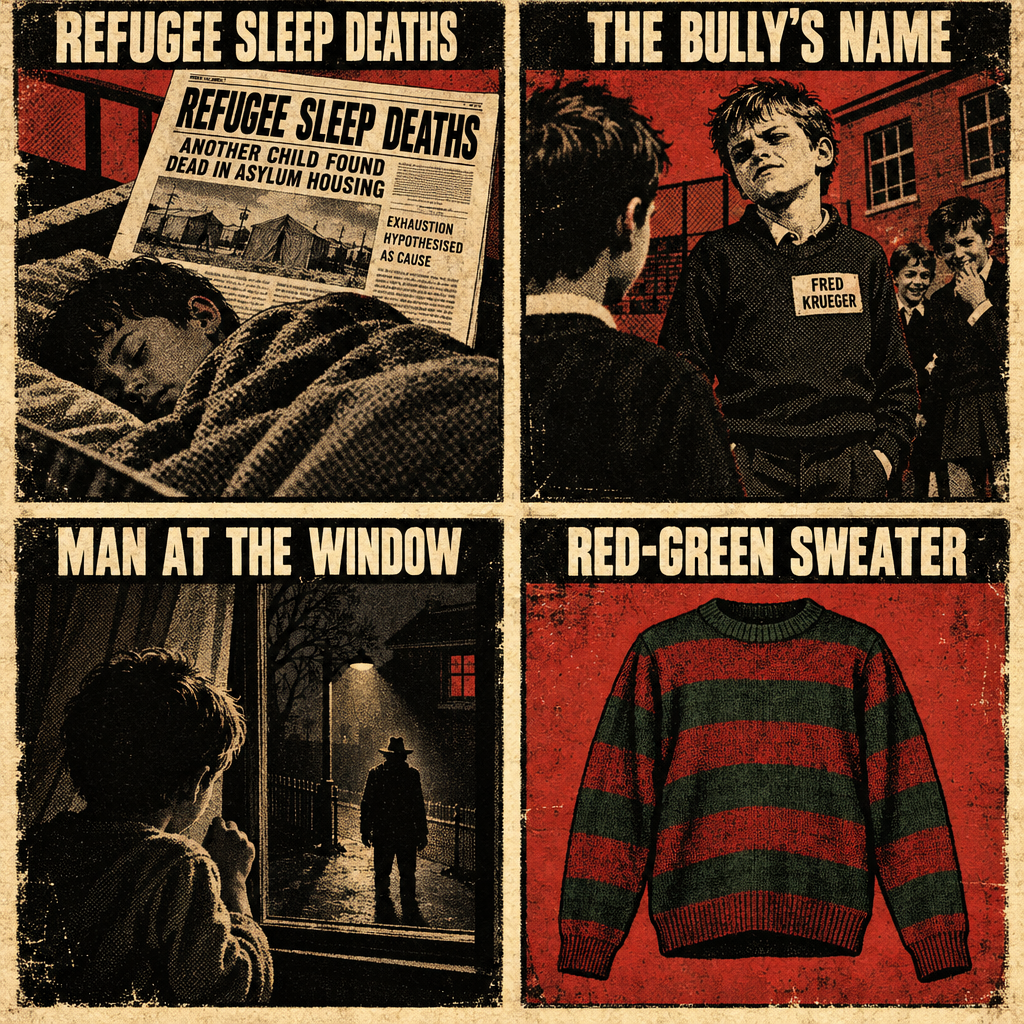
No. There was never a real child killer named Fred Krueger who stalked teenagers through their dreams, whatever a creepypasta tells you. The film is fiction with four real-world sparks behind it:
| Real-life source | What it became in the film |
|---|---|
| Los Angeles Times reports of young refugees dying in their sleep | The core idea: if you fall asleep, you die |
| A boy who bullied Craven at school | Freddy’s name |
| A frightening man Craven saw from his window as a child | Freddy’s look, hat and menace |
| Reading about which colors clash hardest for the eye | The red-and-green striped sweater |
The first one matters most, and it is a far sadder story than the movie it inspired.
The newspaper stories Wes Craven couldn’t shake
Around the turn of the 1980s, Craven noticed a run of short articles in the Los Angeles Times. Each described a young man, usually a recent refugee from Southeast Asia, who went to bed apparently healthy and never woke up. Several of the men had reportedly been tormented by nightmares beforehand. Doctors couldn’t find a cause of death.
Craven told the story many times over the years, in interviews and in the 2010 documentary Never Sleep Again: The Elm Street Legacy. He said it was one case in particular that stuck with him, and you can see why.
The young man who refused to sleep
As Craven recounted it, a teenage boy from a refugee family had nightmares so frightening that he became afraid to fall asleep at all. He stayed awake for days. His worried parents took him to a doctor, who prescribed sleeping pills. Finally the boy dozed off, and the family believed the crisis was over.
Then, in the middle of the night, they heard screaming from his room. By the time they reached him, he was dead.
Afterward, the family found that he had been spitting out the pills instead of swallowing them. They also found a coffee maker hidden in his closet. He had been fighting to stay awake right up to the end.
Craven said the image of a kid insisting something was trying to kill him in his sleep, while the adults around him didn’t believe it, was the whole movie in one news story. Accounts differ on whether that particular family was Hmong from Laos or had fled Cambodia, and Craven himself never seemed sure of the exact family years later. The wider pattern of deaths, though, was heavily concentrated among Hmong men.
What was actually killing young men in their sleep?
This is the angle most “true story” write-ups skip, and it is genuinely fascinating.
A real medical mystery
The deaths were real enough that the Centers for Disease Control began tracking them in the early 1980s, recording dozens of cases among Southeast Asian refugees in the United States. The condition got a clinical name: Sudden Unexplained Nocturnal Death Syndrome, or SUNDS. Victims were overwhelmingly men, mostly young, mostly Hmong, and most had resettled after fleeing Laos in the aftermath of the Vietnam War and the CIA-backed Secret War there.
Similar sudden night deaths had long been known elsewhere in Asia under local names: bangungut in the Philippines, lai tai in Thailand and pokkuri in Japan. Each culture had its own explanation, and each one sounds a little like Freddy.
The night spirit
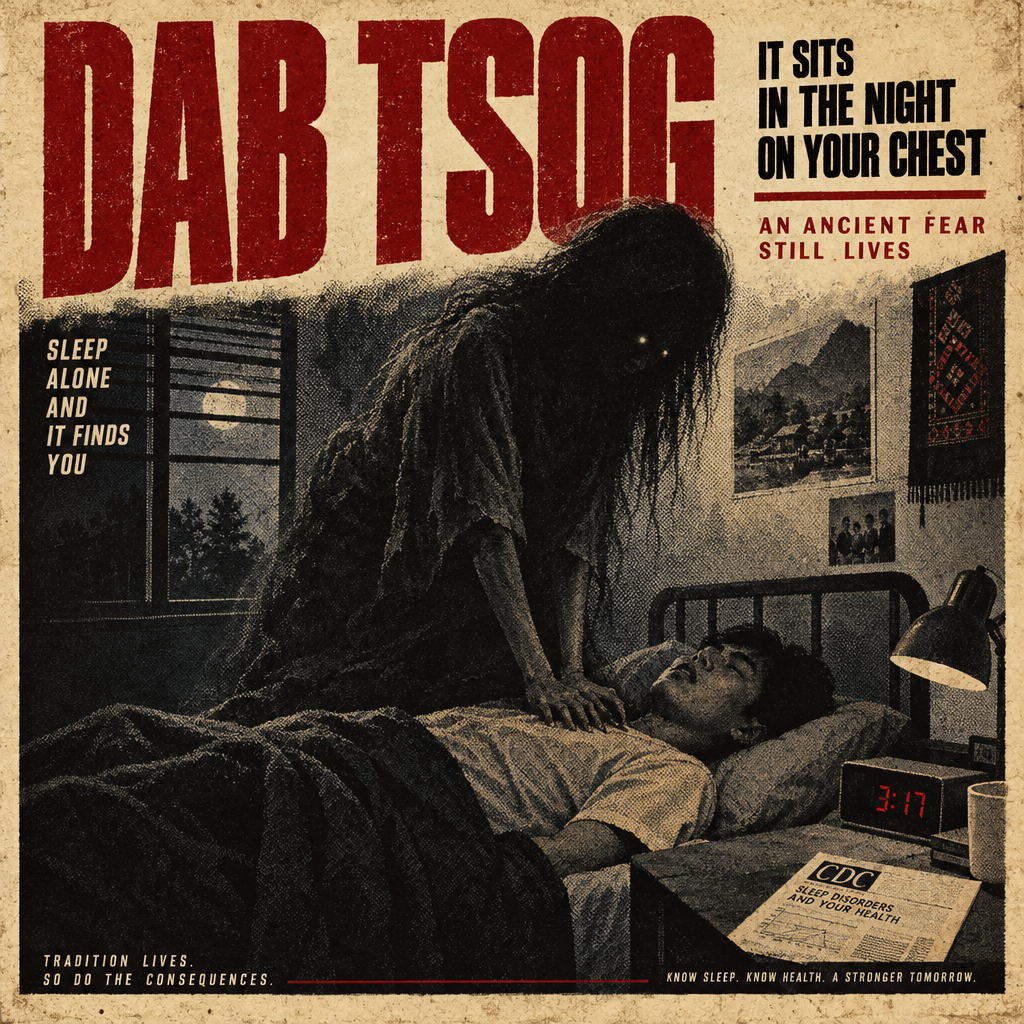
In Hmong tradition, a spirit called the dab tsog (often pronounced roughly “da cho”) visits sleepers at night, pressing on their chests until they can’t breathe or move. Medical anthropologist Shelley Adler spent years studying SUNDS and published Sleep Paralysis: Night-mares, Nocebos, and the Mind-Body Connection in 2011. Her argument: sleep paralysis, combined with the trauma of war and displacement, the loss of the shamanic rituals that would normally protect a family, and real terror of the spirit, could add enough stress to tip a vulnerable heart into a fatal rhythm.
The heart condition underneath
Genetics filled in the rest. Research published in 2002 found that SUNDS is genetically linked to Brugada syndrome, an inherited heart rhythm disorder that can cause sudden cardiac arrest, often during sleep. So the “monster” was, in large part, a hidden cardiac condition. The nightmares and the fear were real, and may have played a role, but no dream demon reached out of the dark.
That science arrived long after Craven had already written his script. In 1981, all anyone knew was that young men were dying in their sleep and nobody could say why. Horror lives in that gap.
Where Freddy’s name, face and sweater came from
Craven pulled the rest of Freddy from his own life.
The name. Craven said he named Freddy after a boy called Fred Krueger who bullied him at school. Fans also point out that “Krug” was the name of the villain in Craven’s own debut, The Last House on the Left (1972), so the surname clearly had grim associations for him.
The man at the window. As a child, Craven looked out of his family’s apartment window one night and saw a disheveled older man in a hat on the sidewalk. The man looked straight up at him, held his gaze, and then started walking toward the building’s entrance as if he were coming up. Young Wes was terrified. That stranger, an adult who seemed to enjoy frightening a child, became the template for Freddy’s posture, his hat and his leering, playful cruelty.
The sweater. Craven said he had read that red and green are among the most jarring color pairings for the human eye, so he dressed Freddy in exactly that. Decades later, the sweater is one of horror’s most recognizable costumes.
The glove. Craven wanted a weapon nobody had seen before, something that tapped a primal fear. He settled on a claw. Animal claws are about as old a nightmare as people have, and a hand-built bladed glove made Freddy feel homemade, personal and wrong.
The backstory Craven changed
In the 1984 film, Nancy’s mother Marge (Ronee Blakley) eventually reveals that Freddy was a child murderer who walked free on a technicality. The parents of Elm Street hunted him down and burned him alive. His revenge targets their children.
Craven’s earliest conception of Freddy was darker still: a child molester. He said in later interviews that he moved away from that version partly because a wave of child-abuse cases was dominating California news at the time, and he didn’t want the film to look like it was exploiting them. The finished original keeps that layer implied at most.
Don’t confuse this with the 2010 remake. Samuel Bayer’s A Nightmare on Elm Street, with Jackie Earle Haley as Freddy, makes the abuse backstory explicit. The 1984 Craven original and the 2010 reboot are separate films with different takes on who Freddy was, so if you see a “true story” article blending the two, treat it with suspicion.
How the real case shaped the film you know
Once you know the refugee story, you see it all over the movie.
- Teenagers who can’t stay awake forever. Nancy Thompson (Heather Langenkamp) and her friends are fighting the same losing battle as that boy. Every scene of Nancy guzzling coffee echoes the coffee maker in his closet.
- Adults who don’t believe. Nancy’s parents, Lt. Don Thompson (John Saxon) and Marge, dismiss her. Marge even pushes her into a sleep clinic. The horror is half Freddy and half being alone with something nobody else will take seriously.
- Death in your own bed. Tina’s (Amanda Wyss) death and Glen’s (Johnny Depp, in his film debut) infamous bed scene put the violence exactly where the real deaths happened: at home, at night, with family just down the hall.
- Pills as a weapon. By the 1987 sequel A Nightmare on Elm Street 3: Dream Warriors, the fictional dream-suppressant drug Hypnocil becomes a plot device. The fight over whether to sleep never leaves the series.
New Line Cinema made the original for a reported budget of around $1.1 million, and it opened in the United States on November 9, 1984. Its success was so central to the young studio that New Line became known as “the house that Freddy built.” Craven, who died in 2015, returned to the idea of dreams bleeding into reality with Wes Craven’s New Nightmare (1994), where Freddy menaces the actual cast and crew.
Myths you can safely ignore
Because the “inspired by real events” angle is so compelling, a lot of nonsense has piled up around it.
- There was no real serial killer named Freddy Krueger. Unlike Leatherface and Norman Bates, who borrowed from the crimes of a real murderer (covered in our “ed gein netflix” piece), Freddy has no single criminal behind him.
- No real town called Springwood. The fictional Springwood, Ohio, was shot in Los Angeles. The famous 1428 Elm Street house is a private home on North Genesee Avenue in Hollywood.
- Craven didn’t invent SUNDS for publicity. The deaths were documented by the CDC and studied by doctors and anthropologists for years.
That last point is worth sitting with. Plenty of horror films lean on a “based on a true story” tag that collapses under scrutiny. Compare the “amityville horror true story“, where the paranormal claims have long been disputed, or the “conjuring true story” built on the Warrens’ case files. Elm Street does the opposite. It never claims to be true, yet its root is one of the most heartbreaking real events in the genre’s history: grieving refugee families who survived a war, only to lose their sons in their sleep in a new country.
Watching it this Halloween
The 1984 original still holds up, especially Langenkamp’s performance and Robert Englund’s first, nastiest version of Freddy before the sequels turned him into a wisecracker. It suits viewers who can handle short, intense bursts of blood but don’t want relentless gore. If you’re squeamish, know that Tina’s death and Glen’s death are the two big gore moments, and the rest leans on dread and dream logic.
Because New Line is part of Warner Bros., the film most often turns up on Warner’s streaming service, HBO Max, and it is widely available to rent or buy digitally. Streaming rights for the series rotate often and vary by region, so confirm on your service of choice a few days before your watch night rather than on the night itself.
If you liked this
Wes Craven’s New Nightmare (1994): Craven’s own meta return, about fiction leaking into real life.
A Nightmare on Elm Street 3: Dream Warriors (1987): the best sequel, with teens fighting back inside their dreams.
It Follows (2014): another unstoppable, slow-walking threat you can’t escape by staying awake or running.
FAQ
Is A Nightmare on Elm Street based on a true story?
Partly. Wes Craven was inspired by Los Angeles Times reports of young Southeast Asian refugees, many of them Hmong, who died in their sleep after nightmares. Freddy Krueger himself is fictional.
What was the real condition behind the deaths?
Doctors called it Sudden Unexplained Nocturnal Death Syndrome (SUNDS). Research published in 2002 linked it genetically to Brugada syndrome, an inherited heart rhythm disorder that can cause cardiac arrest during sleep.
Was Freddy Krueger a real person?
No. Craven borrowed the name from a boy who bullied him at school and based the character’s look on a frightening stranger he saw as a child. No real killer named Freddy Krueger existed.
Why does Freddy wear a red and green sweater?
Craven said he read that red and green clash harder for the human eye than almost any other pairing, so he chose them to make Freddy visually unsettling.
Is the 2010 remake’s backstory the same as the original’s?
No. The 1984 original presents Freddy as a child murderer burned by vengeful parents, keeping darker elements implied. The 2010 remake, directed by Samuel Bayer, makes an abuse backstory explicit.
Where did the “coffee” detail in the film come from?
From the real case Craven read about. The boy who refused to sleep had hidden a coffee maker in his closet, which is echoed in Nancy’s frantic coffee drinking in the 1984 film.