

Abiotic Factor is a first-person co-op survival crafting game from Deep Field Games, published by Playstack. It entered Steam Early Access in May 2024 and reached its full 1.0 release in July 2025. It traps a team of scientists in a research facility overrun by interdimensional creatures. It is funnier than most horror games, but its dark corridors, stalking entities and constant scarcity of food, light and safety still raise your heart rate.
The length is our estimate for a group working through the story. Solo players who explore every room will run longer. Groups who split up jobs will run shorter.
Story and setting
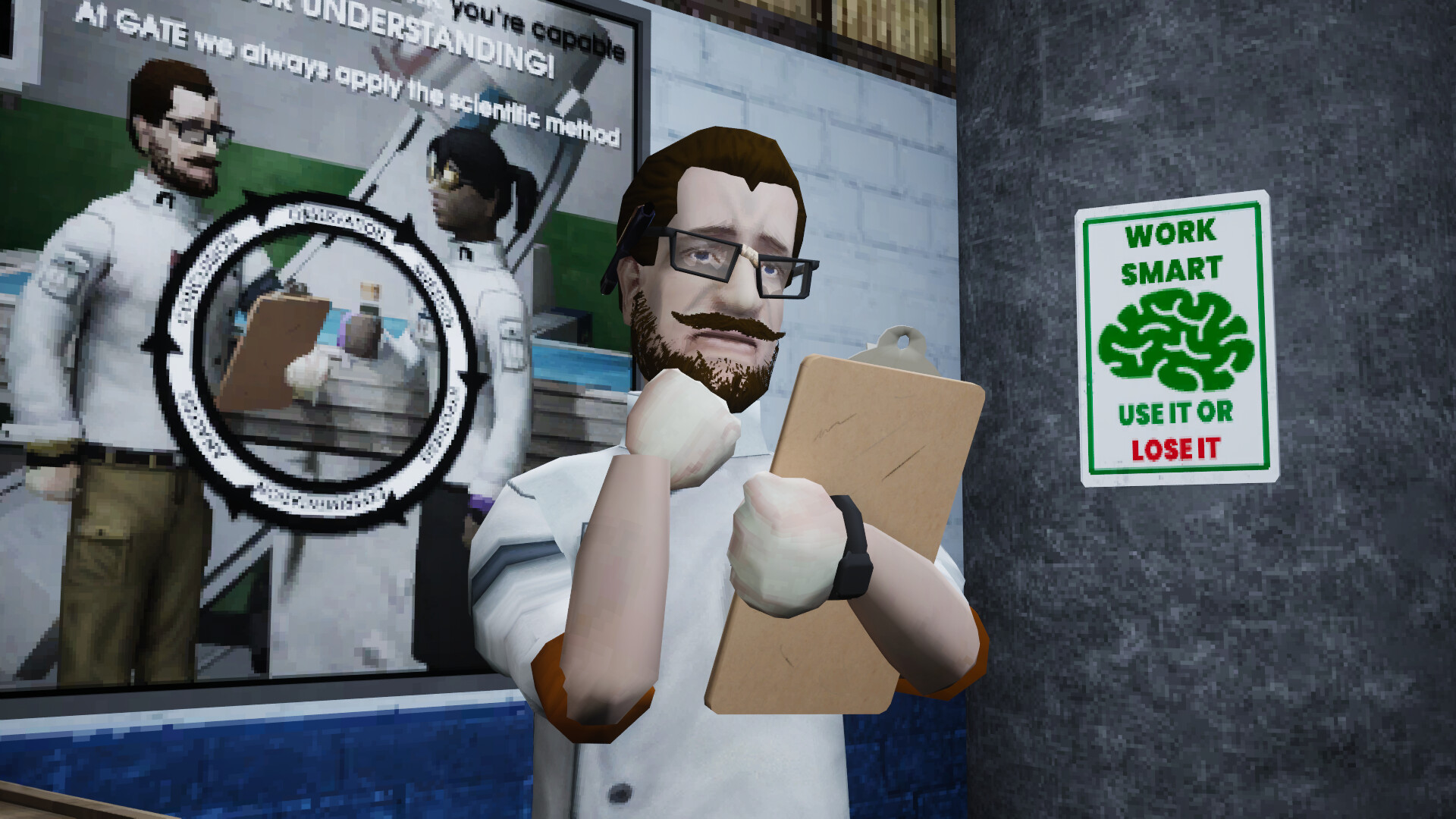
You play a newly hired scientist at an underground research facility run by GATE. GATE is a secretive organisation that studies anomalies the outside world is never told about. The setting is the 1990s, and the game commits to it fully: chunky beige computers, CRT monitors, fluorescent strip lighting and an office culture of memos, keycards and passive-aggressive emails.
Your first day at work goes badly. A containment failure breaks the facility open, and creatures from other dimensions begin roaming the halls. Security locks everything down, and nobody is coming to rescue the staff. You and your coworkers have to survive with what you can scavenge. You turn vending machines, office furniture and lab equipment into weapons, beds and workbenches. Then you push deeper into the complex to work out what happened.
The obvious touchstone is Half-Life. Valve’s Black Mesa clearly inspired the scientist protagonists and the corporate research disaster. The game also borrows from the SCP Foundation idea of a bureaucracy that catalogues horrors like office supplies. Deep Field Games plays that tone for laughs as often as for dread, which is a big part of the appeal.
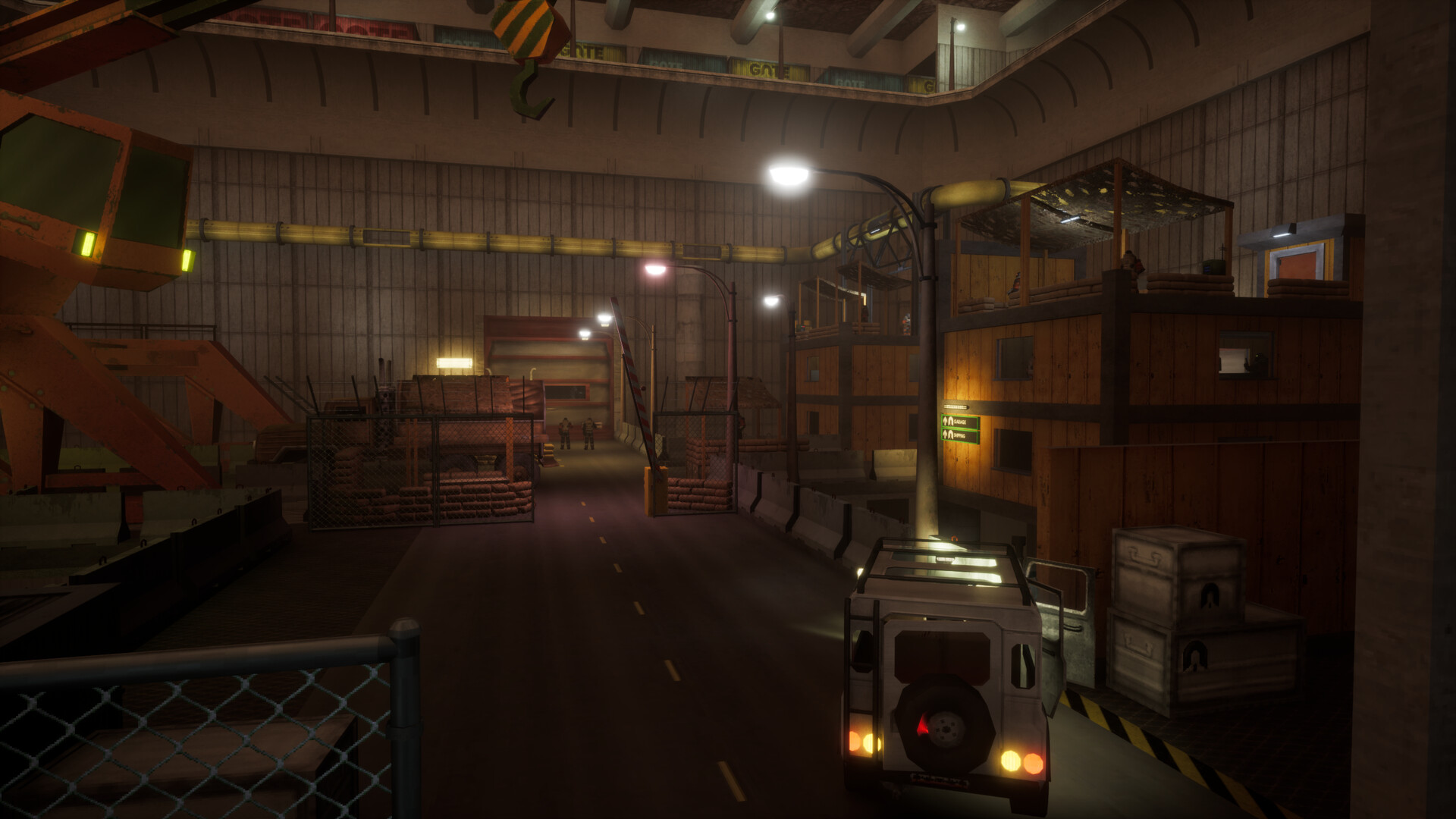
You start in the Office Sector, the opening area most beginner guides walk you through. From there you move through industrial zones, labs, security wings and other parts of the facility. You also travel through portals into strange worlds beyond it. Each new area brings new enemies, new materials and new recipes, so the map doubles as your progression ladder.
How it scares you
Abiotic Factor is a survival crafting game first and a horror game second. That matters for setting expectations. You will spend more time managing hunger and building a base than hiding in lockers. The fear comes from vulnerability rather than from scripted scares. You are a lab-coated academic with a sharpened ruler, and the facility is not built for you to survive in.
Enemies that hunt you
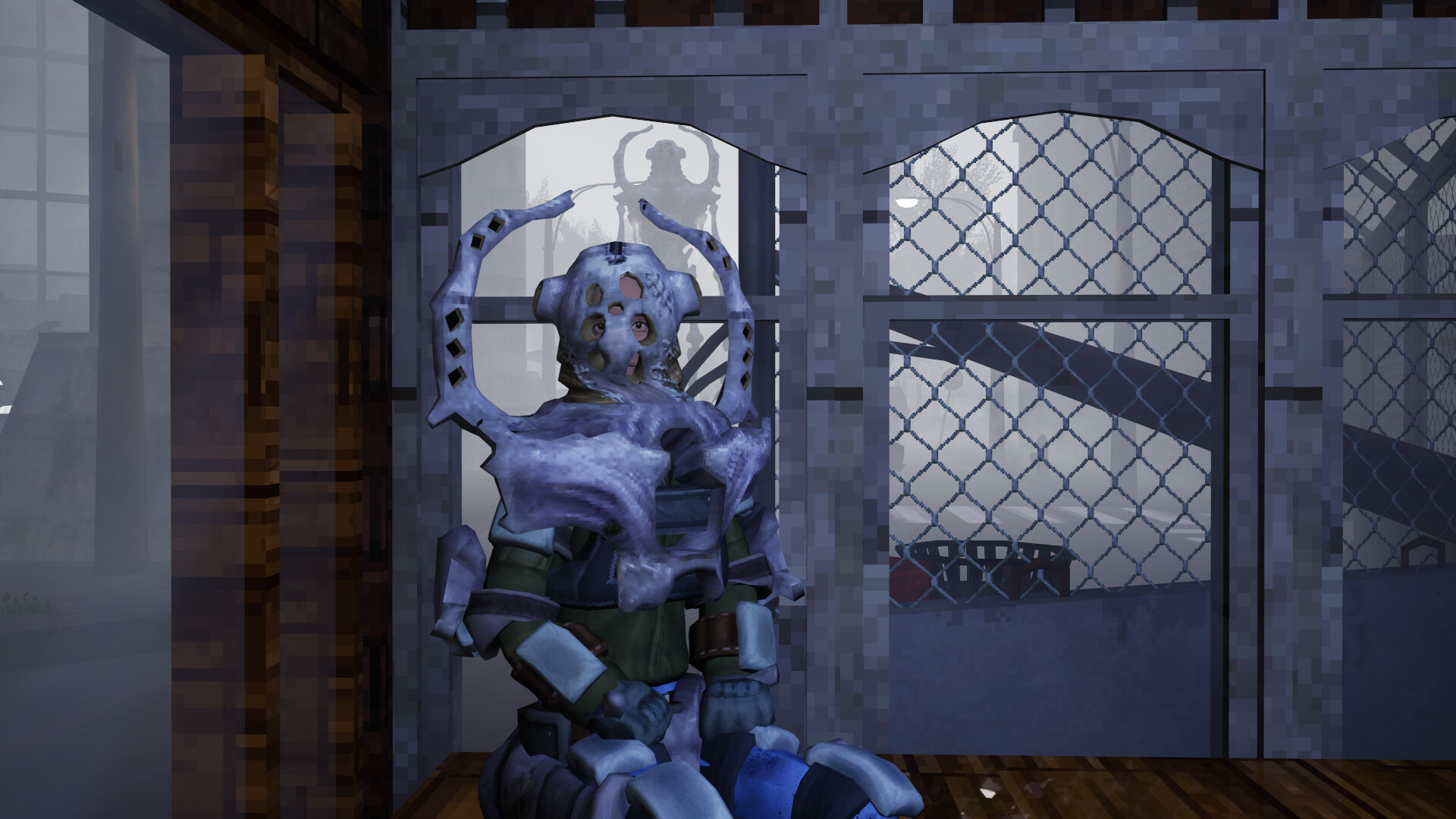
The early bestiary is small and manageable: pest creatures, hostile wildlife from the portal worlds, and human enemies once the story widens. The game’s best horror tool is the Leyak, a stalking entity that drifts through walls. It announces itself with unsettling audio and visual distortion before it strikes. It is the moment co-op groups start shouting at each other.
You cannot simply out-fight everything. Many threats are better avoided, lured away or dealt with through preparation. A stalker you cannot permanently kill early on changes how you move through a level. You stop sprinting blindly and start listening.
The Order of the Unseen are hostile humans with their own agenda and their own technology. They make the facility feel contested rather than just haunted. Fighting people who can shoot back ends the “it’s just animals” comfort of the first few hours.
Resources and survival needs
Scarcity is the engine of tension. You track several needs at once, and letting any of them slide makes you weaker, slower or more likely to die in a bad spot.
| Need | What happens if you ignore it | How you fix it early |
|---|---|---|
| Hunger | Your character weakens, and stamina and health suffer | Vending machine snacks, scavenged food, then cooked meals |
| Thirst | Fast decline, faster than hunger | Water fountains, sinks, bottled drinks, then purified water |
| Fatigue | Penalties build until you rest | Craft a bed or sleep somewhere relatively safe |
| Continence | Yes, you need the bathroom | Find or build a toilet; ignoring it is messy and costly |
The bathroom meter is a joke the game commits to, but it also does horror work. A toilet trip means a short walk through dark corridors. That walk can turn into a fight if something has wandered into your base area.
Light matters too. Much of the facility is dim or unpowered, and your flashlight and power sources decide how confidently you can explore. Running low on batteries in a part of the map you don’t know is one of the game’s most reliable sources of dread.
Jobs, traits and skills
Character creation shapes how scary the game feels. You choose a job, which gives your scientist a starting specialty. You then pick traits, where taking negative traits buys you positive ones. Picking a combat-leaning job helps a nervous player feel braver. Stacking risky negative traits for perks makes every encounter more punishing.
Skills improve through use. Fight with melee weapons and you get better at melee. Cook often and your meals improve. Sneak and you get quieter. Your scientist grows from a terrified intern into someone who can hold a corridor, so the scare level drops as you level up and climbs again when a new sector raises the stakes.
In co-op, the job system nudges groups to divide labour. One player cooks and farms, one crafts, and one handles base defense and scouting. That split is useful in practice and adds tension, because the player out scavenging alone is the one most likely to meet something unpleasant.
Recipes and crafting
New recipes unlock as you pick up materials you haven’t handled before and as you find documents and data around the facility. That gives exploration a pull even when you are scared: the next dark room might hold the part that unlocks better armour, a better weapon or a way to keep food fresh.
Crafting stations are your base’s backbone. Your first workbench turns scavenged scrap into basic tools and weapons. Later stations open up cooking, armour, electronics and portal-related gear. A base full of humming stations is comforting in a way few horror games allow. That comfort is exactly what makes leaving it uncomfortable.
Your first hours in the Office Sector
Most beginners hit the same few walls early on. Here is a quick checklist of priorities that keeps your first night from turning into a string of deaths.
| Priority | Why it matters | What to do |
|---|---|---|
| Pick a base spot | You need a safe place to craft, sleep and store loot | Many players settle near food and water in the Office Sector; pick somewhere with few entrances |
| Build a workbench | Unlocks basic tools and weapons | Scavenge scrap, office parts and anything you can break down |
| Craft a weapon | Early enemies punish bare hands | Make a basic melee weapon before wandering far |
| Sort food and water | Hunger and thirst drain constantly | Note every vending machine, fountain and fridge you find |
| Build a bed | Fatigue and respawning | A bed lets you rest and gives you a respawn point |
| Read everything | Story, objectives and recipes live in documents | Check computers, emails and notes as you go |
When you die, you drop what you were carrying and respawn at your bed. You then have to go back and recover your gear. Those retrieval runs are where the game gets properly tense. You are under-equipped, and you are walking back to the exact spot where something already killed you.
Pacing, sound and camera
The first-person camera keeps your view narrow. In a facility full of corners, vents and doorways, you rarely see a threat clearly until it is close. Sound fills the gap. Creatures have distinct audio cues, and learning to recognise them is part of surviving. The stalker entities are designed around this: you hear them before you see them, and the delay is where the fear lives.
The pacing is loose. There is no countdown pushing you forward, so you set your own rhythm between base building and expeditions. That makes the game a good fit for players who find relentless chase sequences exhausting. You decide when to go into the dark, and you can go in prepared.
This is not a game built around hiding mechanics or long scripted chases. It is closer to a survival game with horror edges: fight what you can, avoid what you can’t, and keep your base stocked so a bad run doesn’t wipe your progress.
Who it suits
Abiotic Factor is a strong pick for a co-op group that wants spooky without terrifying. It is also a gentle step for players who usually bounce off survival horror because of gore or relentless pressure. The low-poly art keeps violence cartoonish, and the comedy releases tension often. Players looking for sustained, oppressive fear should look elsewhere. Our roundup of the best “horror games” covers the heavier hitters.
Lore and ending
Spoiler warning
This section discusses the facility’s backstory, factions and the shape of the story through to the 1.0 finale.
The heart of Abiotic Factor’s lore is GATE itself. The organisation is a research outfit that gathers anomalies, entities and dimension-crossing technology, then studies them with very little concern for the staff doing the studying. Almost every email and memo you read reinforces the same point. The disaster was not bad luck. It was the predictable result of an institution that treated catastrophic risk as a line item.
The portal worlds are the second pillar. GATE’s experiments opened connections to other dimensions, and the creatures roaming the halls are the consequence. As you progress, you stop simply surviving those worlds and start using them, travelling through portals to gather materials and push the story forward. The game slowly turns from “escape the disaster” into “understand the disaster”. By the late game your scientist knows more about GATE’s secrets than most of its management ever did.
The Order of the Unseen is the human threat. They are not mindless monsters. They have goals of their own tied to the same otherworldly forces GATE was poking at. Their presence turns the story from a monster outbreak into a conflict over who controls what was found down there.
Most of the story comes through documents rather than cutscenes. Computers, emails, notes and logs build a picture of the facility’s staff, their petty office feuds, their warnings that were ignored and their final days. It is environmental storytelling in the Half-Life and System Shock tradition. A lot of the best lore is optional, so players who skim past terminals will miss most of the texture.
The full narrative only arrived with the 1.0 release in July 2025. Early Access players had been working with an incomplete story until then, and the final release added the last areas and the conclusion of the arc. Thematically, the ending pays off the game’s running argument. Throughout, the scientists GATE treated as disposable are the ones who actually understand the stakes, and the ending is the point where your crew stops reacting to GATE’s mess and acts on what you have learned. We would rather leave the final beats for you to experience than summarise them flatly here. They land best after 40-odd hours with your group.
Where to play
Abiotic Factor is a standalone game with no prequels, remakes or remasters, so you start at the beginning. The bigger question is which platform your co-op group shares.
| Platform | Store | Subscription | Notes |
|---|---|---|---|
| PC | Steam | None | The original home of the game since Early Access in May 2024; dedicated servers supported |
| Xbox Series X|S | Microsoft Store | Xbox Game Pass | Arrived with the 1.0 release in July 2025 |
| PC (Microsoft) | Microsoft Store / Xbox app | PC Game Pass | Launched alongside the Xbox version |
| Steam Deck | Steam | None | Runs on Deck; check Valve’s compatibility badge on the store page for current status |
A PlayStation 5 or Nintendo Switch version was not part of the 1.0 launch. Platform lineups and subscription catalogues change, so treat this table as the state of play as of October 2026 and check your store before you buy. Game Pass titles in particular can rotate out of the service.
PC is the most flexible way to play. You can host or join through Steam, run a dedicated server for a long-running group save, and adjust settings to taste. If your friends are all on PC, Steam is the simplest choice. If you are building a horror night around your desktop, our list of the best “pc horror games” has more picks to pair with it.
On Steam Deck the low-poly art style helps a lot. The game is not graphically demanding, which makes it a comfortable handheld option for shorter base-building sessions. A controller is fine for scavenging and crafting, though some players still prefer mouse and keyboard for menu-heavy inventory management.
If you liked this
SCP: Containment Breach (2012) is a free, much scarier take on the same idea of escaping a facility full of catalogued anomalies, with almost no humour to soften it.
Lethal Company (2023) captures the same co-op chaos of friends scavenging somewhere they shouldn’t be, with more panic and more screaming.
Subnautica (2018) offers survival crafting with a creeping sense of dread, as the deeper you push for resources, the worse the things you meet.
FAQ
Is Abiotic Factor actually scary?
It is mildly scary. We rate it 2/5. The atmosphere is excellent and stalker enemies like the Leyak deliver real tension, but the humour, the low-poly visuals and the base-building comfort keep it well below survival horror like Resident Evil or Silent Hill. It works well as a gateway for players who usually avoid horror.
Can you play Abiotic Factor solo?
Yes. The game supports solo play, but it is designed around co-op for 1-6 players. Playing alone means you handle every job yourself: cooking, crafting, scouting and defense. That makes progress slower and the dark corridors lonelier, which some players find scarier.
How long does it take to beat Abiotic Factor?
Expect roughly 40 hours or more for the main story, based on our estimate for a group playing at a normal pace. Your time depends heavily on group size, how much optional lore you read and how much you invest in your base.
Is Abiotic Factor on Game Pass?
Yes. It joined Xbox Game Pass and PC Game Pass with its 1.0 release in July 2025. Subscription catalogues rotate, so confirm it is still included before you start a long save.
Is Abiotic Factor on PS5?
A PlayStation version was not part of the 1.0 launch, which covered PC and Xbox Series X|S. Check the PlayStation Store for any later port before assuming it is unavailable.