

Capcom’s Production Studio 4, under director Shinji Mikami, shipped Resident Evil 4 on the GameCube in January 2005 and rewired the whole survival horror genre with one over-the-shoulder camera. It is action horror, loud and bloody, and it frightens you by making crowds of ordinary-looking villagers feel smarter and more patient than you are. The original Resident Evil 4 is still the version worth talking about, remake or no remake.
Story and setting
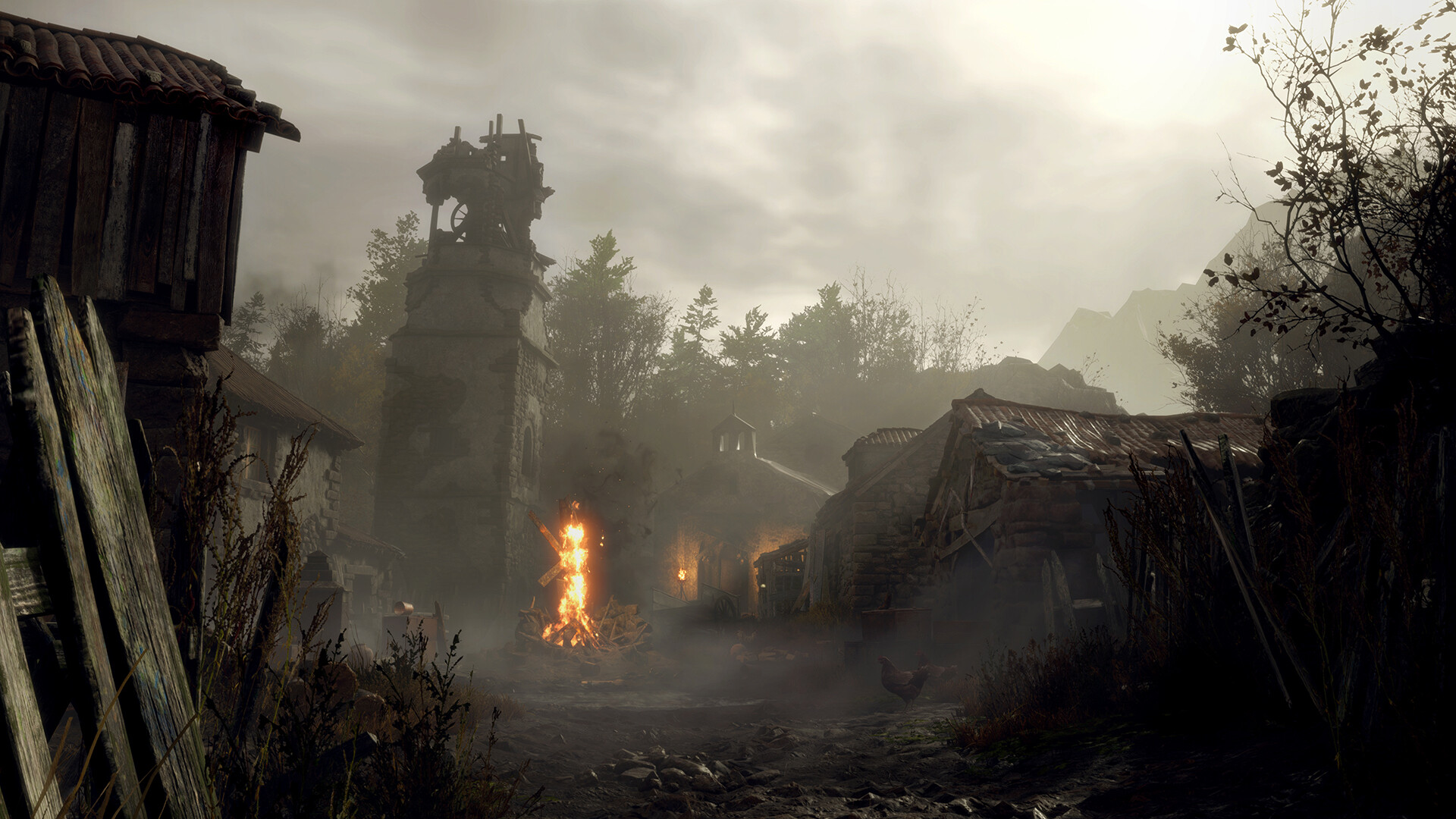
You play Leon S. Kennedy, six years older than the rookie cop who survived Raccoon City in 1998 and now a United States government agent. In autumn 2004 the President’s daughter, Ashley Graham, is kidnapped, and intelligence points to a rural, never-named region of Spain. Leon is dropped off at the edge of a village by two local police officers who would very much rather be anywhere else.
The region belongs to Los Iluminados, a cult led by a robed preacher called Osmund Saddler, and everyone Leon meets has had their mind rewired by a parasite the locals call Las Plagas. The villagers, the Ganados, still farm, still gather in the church, still carry pitchforks and lanterns. They just happen to want you dead, and they coordinate about it. If you have been following “leon kennedy” through the series, this is the game where he becomes the character everyone remembers: sarcastic, suplexing, and permanently exhausted by cult leaders.
The game unfolds across three big areas. There is the village and its farmland, a sprawling castle owned by a tiny, shrieking aristocrat named Ramon Salazar, and finally a military island. You escort Ashley for long stretches, trade with a mysterious hooded Merchant, and keep running into a woman in a red dress who clearly knows more than she is saying. That is “ada wong“, and the original Resident Evil 4 is arguably her best showing in the whole franchise.
How it scares you
Mikami’s trick was to take away the thing that made the early Resident Evils safe. In the fixed-camera games, enemies were slow and doors were a reset button. Here the camera sits behind Leon’s shoulder, he cannot move while aiming, and the Ganados throw hatchets, climb through windows, set up ladders, and flank you while you are busy lining up a headshot. The opening village siege is still a masterclass. You hear the chainsaw rev before you ever see Dr. Salvador, and then the church bell rings and everyone simply walks away, which is somehow worse.
Enemies that make you second-guess the trigger
Headshots are not always the end of a fight. Blow a Ganado’s head off and a Plaga can erupt from the neck stump, a whipping tentacle or a snapping jaw that one-shots you if you get close. So you learn to shoot kneecaps, close in for a roundhouse kick, and back off again. The game constantly rewards aggression and then punishes you for getting greedy. The castle introduces the Garradors, blind armoured giants who track you by sound, and the Novistadors, invisible insects that hide in a hive-lit sewer. The island brings the Regenerators and Iron Maidens, which breathe like something drowning and keep standing up until you find the thermal scope and shoot out the parasites hiding inside their chests. That stretch of the game is the closest the original Resident Evil 4 comes to classic survival horror dread, and it earns every second.
The Merchant and the resource economy
The hooded Merchant sells you weapons, upgrades, and attaché case expansions for pesetas you loot from corpses and treasure. The economy is the hidden engine of the fear. Ammo is never truly scarce, but it is unevenly distributed, so you will routinely enter a boss arena with six shotgun shells and a prayer. Upgrading firepower, reload speed and capacity is a genuine strategic choice, and selling a treasure to afford the Red9 pistol a chapter early changes how you feel about every corridor after it. The attaché case itself is a Tetris puzzle that many players spend more time in than they would admit.
Ashley, pacing, and the QTE problem
Escorting Ashley sounds like a chore and often is, but it is also a fear mechanic. A Ganado who scoops her up and carries her toward an exit flips your priorities instantly. You can order her to wait or hide in dumpsters, and the game is smart about giving you solo sections to breathe before piling her back on. Pacing is the thing the original gets most right: a tense village fight, a quiet cabin, a lake monster, a merchant hut, a cable car, a boss, repeat, with the mood tipping a little darker each time.
The weak point, honestly, is the quick-time events. Mikami sprinkles button prompts through cutscenes, so a knife fight with Jack Krauser can end in a loading screen because you looked away for a second. Boulders, lasers, and a certain hallway of lasers are all one missed button from death. Treat every cutscene as live and you will be fine.
Sound does a lot of the heavy lifting. Ganados mutter “Un forastero” and “Detrás de ti, imbécil” in Spanish, the castle has that droning, churchy score, and the Regenerators are scary almost entirely because of their breathing. Play with headphones once and you will never go back to TV speakers.
Lore and ending
Spoiler warning
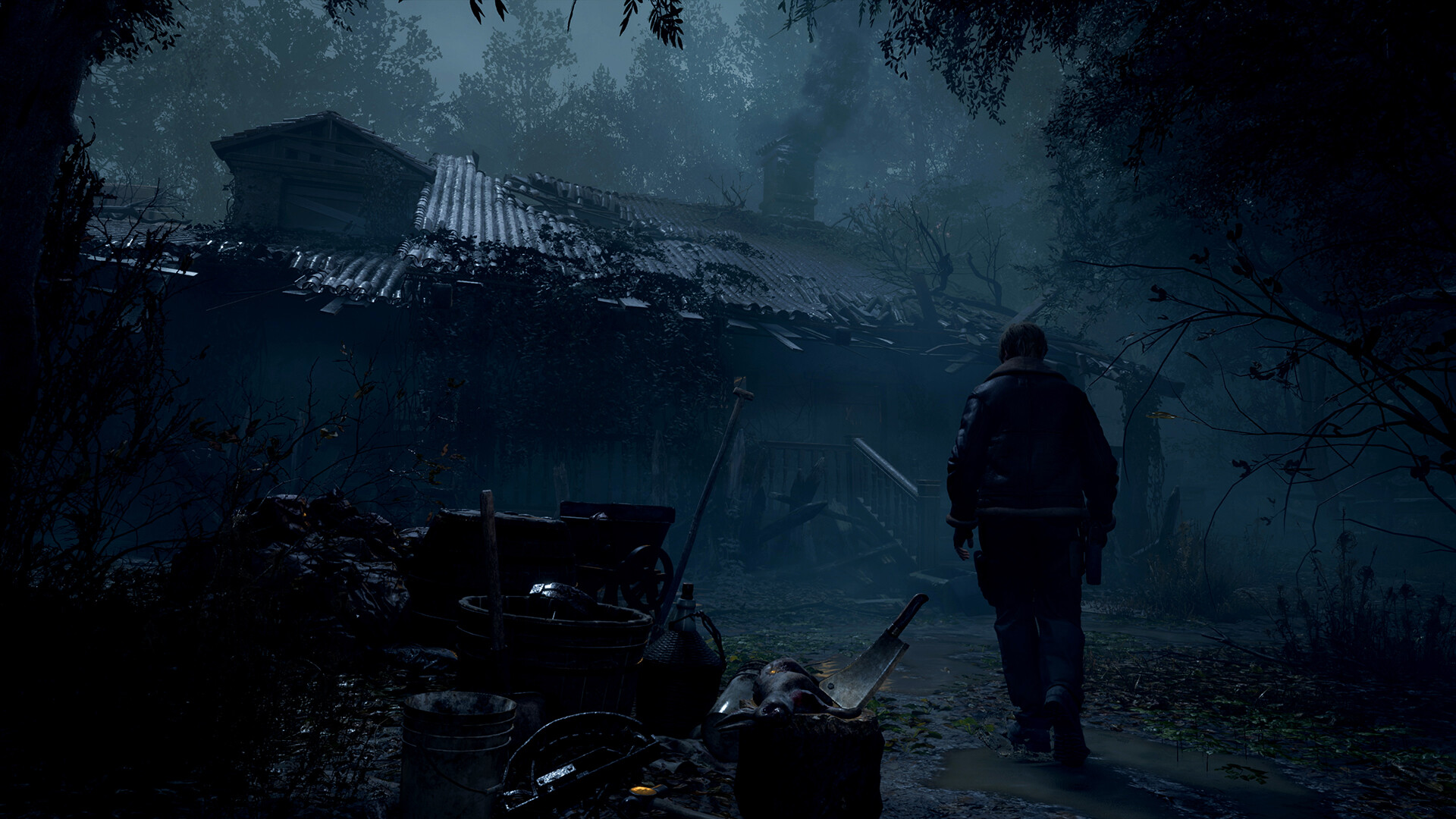
The paragraphs below spoil the ending of Resident Evil 4, every major boss death, Ada’s epilogue, and the fate of Krauser and Luis.
The ending
After Saddler captures Ashley on the island and reveals that both she and Leon have been implanted with Plaga eggs, Leon fights his way to a research lab where the two of them are cured with a radiation device Luis Sera helped build. Luis himself was stabbed through the back by Saddler in the castle, dying while handing over the suppressant pills that bought Leon time.
The final confrontation puts Leon against Saddler, who mutates into a massive multi-legged form with an eye in its mouth. Ada tosses Leon a special rocket launcher from a scaffold, Leon fires, and Saddler dies. Then Ada turns a gun on Leon and takes the master Plaga sample, the whole point of her presence in Spain, before flying off in a helicopter and triggering the island’s self-destruct. Leon and Ashley escape on a jet ski as the island collapses. On the ride out Ashley flirts, Leon turns her down, and Hunnigan calls to confirm the mission is over. There is only one ending to the main campaign, with no branches based on your choices.
What it means
Ada’s betrayal is the lore hinge of the whole game. Separate Ways, the second campaign added for the PlayStation 2 release in late 2005, shows the events from her side: she is working for Albert Wesker, who wants Las Plagas for his own bioweapon ambitions, and she spends the game steering Leon toward the sample while pretending to help. Her final report has her stating the sample will reach “the organization”, with heavy implication she has her own agenda. The consequences play out across Resident Evil 5 in 2009 and the CG films, where Plaga-derived weapons keep turning up.
Jack Krauser is Leon’s former partner from a 2002 South American mission, which only gets depicted later in The Darkside Chronicles for the Wii in 2009. He faked his death, joined Wesker, and infected himself with a Plaga that turns his arm into a blade. Leon beats him in a knife duel and then a ruins fight, and Ada finishes him off in Separate Ways. Bitores Mendez, the village chief with the metal hooks, and Salazar, who merges with a flower-like Plaga, are the other two boss landmarks. Salazar’s two bodyguards, the Verdugos, give you the game’s most tense optional fight in a freezing basement where liquid nitrogen is your only real weapon.
Bonus modes and secrets
Clearing the campaign once unlocks the real meat of the original Resident Evil 4. Here is what sits behind the credits:
- The Mercenaries: a timed arena mode across four maps (Village, Castle, Island, Waterworld) where you chain kills for score. You start with Leon and unlock Ada, Krauser, HUNK and Wesker by earning four stars on a map. Five stars on every map with every character unlocks the Handcannon, a magnum you can upgrade to infinite ammo.
- Assignment Ada: a short mission on the island where Ada collects Plaga samples. Finishing it unlocks the Chicago Typewriter, a tommy gun with infinite ammo, in the main game.
- Separate Ways: the five-chapter Ada campaign, on every version from PS2 onward. Clearing it also unlocks the Typewriter for Leon and the Special 2 costume, which includes Ashley’s knight armour that makes her unkidnappable.
- Professional difficulty: unlocked after any clear, with Ganados that hit far harder. On PS2 and later, finishing Professional unlocks the P.R.L. 412, a laser weapon that vaporises Plagas.
- Infinite Rocket Launcher: purchasable from the Merchant for 1,000,000 pesetas after a clear, and the single most satisfying New Game Plus purchase in any “horror games” library.
- The Matilda: Leon’s Resident Evil 2 pistol, unlocked after one clear, firing three-round bursts.
The Movie Browser lets you rewatch cutscenes, and a few of the shooting gallery mini-games in the castle reward bottle caps you can collect on the Merchant’s shelf. None of it is essential, all of it is why people have 300 hours in this game.
Where it fits in the series
Resident Evil 4 is the fourth numbered mainline entry and the sixth installment overall once you count Zero and Code: Veronica, and it was released in January 2005, after Code: Veronica (2000 Dreamcast) and well before Resident Evil 5. Development was famously chaotic. One early version, led by Hideki Kamiya, drifted so far into stylish action that Capcom spun it off as Devil May Cry in 2001. A later build, the “hook man” version shown in 2003 with a haunted castle and a ghostly attacker, was scrapped before Mikami took over and built the Spain game you know.
Every version of the original, in release order
| Version | Year | Platform | What it adds or changes |
|---|---|---|---|
| GameCube original | 2005 | Nintendo GameCube | Main campaign, Mercenaries, Assignment Ada. No Separate Ways. |
| PlayStation 2 | 2005 | PS2 | Adds Separate Ways, Ada’s Reports, PRL 412, Movie Browser. Lower-quality textures and lighting. |
| Sourcenext PC port | 2007 | Windows | Notoriously rough port, missing mouse aiming at launch and lighting effects. Avoid. |
| Wii Edition | 2007 | Wii (and Wii U via eShop) | PS2 content with pointer aiming, which many fans still call the best control scheme. |
| HD / Revival Selection | 2011 | Xbox 360, PS3 | Widescreen and higher resolution, but textures mostly upscaled from the originals. |
| Ultimate HD Edition | 2014 | Windows (Steam) | 60 frames per second, 1080p, improved textures, full content. Basis for most later ports. |
| HD console ports | 2016 | PS4, Xbox One | Ultimate HD Edition content at 60 fps on consoles. Plays on PS5 and Series X |
| Switch port | 2019 | Nintendo Switch | Same content, 30 fps, handheld-friendly. |
| VR edition | 2021 | Meta Quest 2 | First-person VR rebuild by Armature Studio. |
The 2023 remake from Capcom, built on the RE Engine and released in March for PS4, PS5, Xbox Series X|S and PC, is a separate game. It reworks the Krauser fight into a playable duel, cuts the U-3 boss, rebalances the knife with durability, received The Mercenaries as free DLC in April 2023, and received Separate Ways as paid DLC in September 2023. It is excellent, but it is not what people mean by “resident evil 4 original”, and the two are different enough that playing both is genuinely rewarding rather than redundant.
Which version to play first
Play the 2014 Ultimate HD Edition on PC or one of the 2016 console ports. You get every mode, 60 frames per second, and the full Separate Ways campaign. The GameCube original is the purist’s pick for its lighting, which the PS2 port lost and no later version fully restored, but it lacks Separate Ways and needs original hardware. If you own a Wii, the Wii Edition is a legitimate alternative purely for the pointer aiming. On PC, the fan-made RE4 HD Project, which rebuilt the textures from re-photographed Spanish locations and released its finished version in 2022, turns the Steam game into the definitive edition.
Where to play
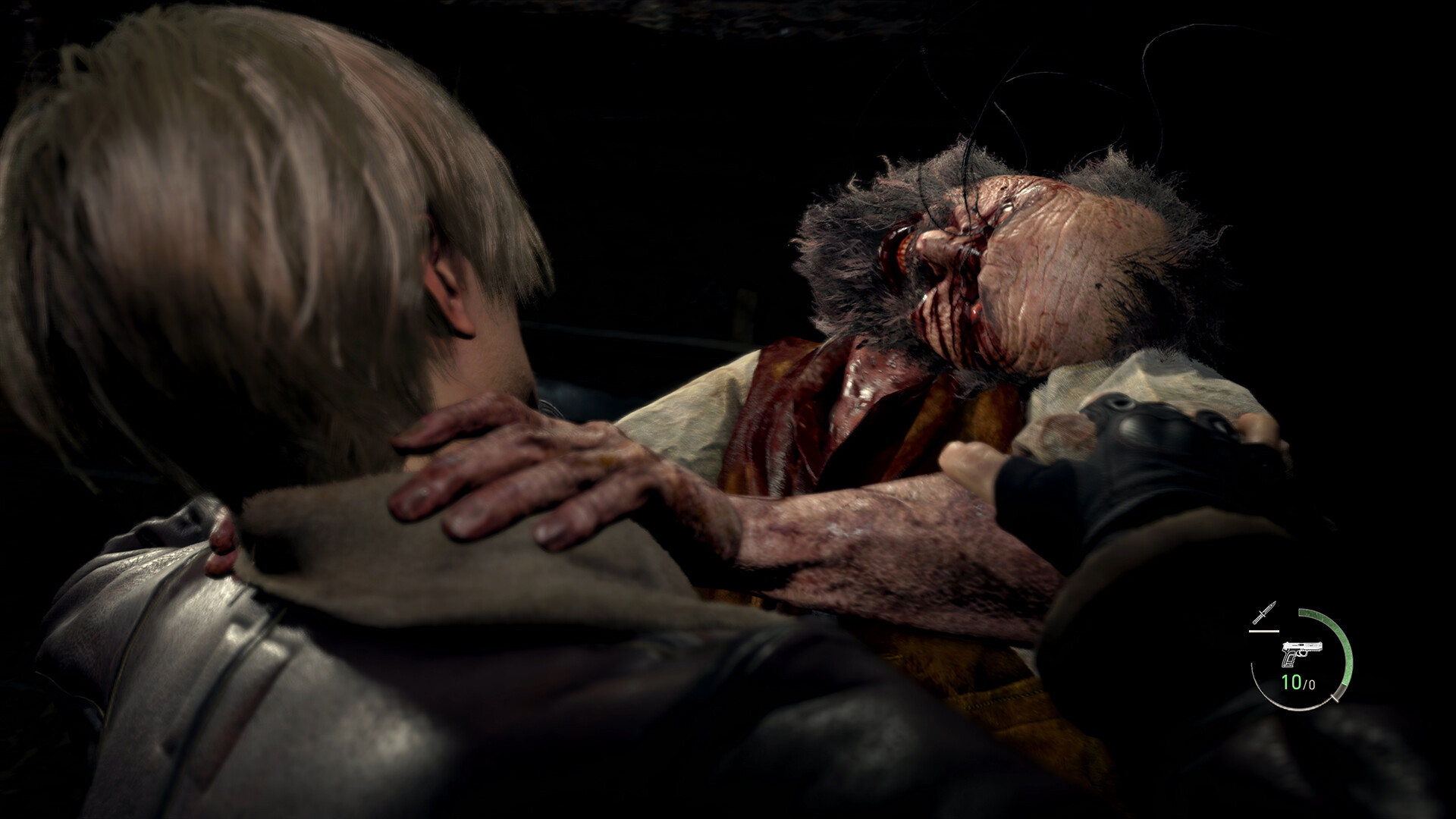
As of October 2026, the original Resident Evil 4 is sold digitally as “Resident Evil 4 (2005)” on Steam, and as Resident Evil 4 on the PlayStation Store (PS4, playable on PS5), the Xbox Store (Xbox One, playable on Series consoles), the Nintendo eShop for Switch, and the Meta Quest store for the VR edition. Physical copies of the PS4 and Xbox One versions were printed in 2016 and are easy to find second-hand. Neither Game Pass nor PlayStation Plus keeps the original as a permanent fixture, so check the current catalogue rather than assuming it is included. If you keep a list of “pc horror games” to work through, the Steam version is the one to own.
How to get the original running today
What you need:
- A platform from the list above. Steam is the most flexible.
- A controller. The game was designed for one, and mouse aiming in the PC version works but feels fussy.
- Around 16 hours for the main story, closer to 30 if you chase Separate Ways and Mercenaries unlocks.
- Headphones, for the Regenerators.
Steps:
- Buy the right listing. On Steam, search for “Resident Evil 4 (2005)” specifically. The 2023 remake is simply “Resident Evil 4” and appears first. On console stores, check the release year on the product page.
- Pick your difficulty. Normal is the intended experience. Easy exists on PS2 and later versions and removes some enemies, which actually makes the game less interesting. Amateur on the Steam version is fine for a first horror game.
- Set the frame rate. The Ultimate HD Edition offers 30 or 60 fps. Choose 60 and stick with it. Some QTE timings and one specific door-kick are tuned differently at each setting, and switching mid-game can throw you off.
- Learn the kick. Shoot a Ganado in the head or knee, close distance, and press the action button when the prompt appears. This is the whole combat loop, and it saves more ammo than any gun upgrade.
- Get the shotgun from the village house for free. It hangs on the wall upstairs in the house with the Merchant-style ladder, before the chainsaw fight. Do not pay for one.
- Use the typewriters. Saves are unlimited on every version from PS2 onward, so save at each one. Chapter clears also give you a checkpoint you can retry from.
- Steam Deck users: the game runs on Deck through Proton in my experience. Check Valve’s current compatibility badge before buying as of October 2026, and map the knife to a back paddle.
Common mistakes:
- Selling the Punisher or the Red9 without upgrading either. Commit to one handgun.
- Wasting the rocket launcher. One rocket kills almost any boss, including the Verdugo and El Gigante.
- Running from the village bell fight too early. Stay in the house, use the ladders, and farm the villagers for pesetas and ammo before the bell.
- Leaving Ashley exposed in the castle’s water hall. Tell her to wait in a far corner before you touch the levers.
- Skipping the thermal scope on the island. Without it, Regenerators are bullet sponges.
Expected result: a first clear around the 16-hour mark on Normal, a rank screen showing your time and accuracy, Professional and the Mercenaries unlocked, and a very strong urge to start New Game Plus with the Chicago Typewriter.
If you liked this
Resident Evil 4 (2023), for the same campaign rebuilt with a dodge, a parry and a far scarier Regenerator section.
Dead Space (2008), for Resident Evil 4’s over-the-shoulder combat transplanted onto a spaceship where you aim for limbs instead of heads.
The Evil Within (2014), for Shinji Mikami’s own spiritual sequel, with the same village-and-chainsaw opening and a much nastier mood.
FAQ
Is the original Resident Evil 4 still worth playing after the remake?
Yes. The 2005 game has a goofier tone, different boss encounters including the U-3 and the full Salazar statue chase, Assignment Ada, and the original Mercenaries roster with Wesker and HUNK. The remake is more polished and more frightening, but it is a reinterpretation, not a replacement.
How long does the original Resident Evil 4 take to beat?
Around 16 hours for a first run of the main story on Normal, longer if you explore for treasures. Separate Ways adds four or five hours, and chasing every Mercenaries unlock can double your total.
Which version of Resident Evil 4 original is the best?
The Steam Ultimate HD Edition from 2014, ideally with the fan-made HD Project installed. The PS4 and Xbox One ports from 2016 are the same content at 60 fps if you prefer a console. The GameCube original has the best native lighting but no Separate Ways.
Does the original Resident Evil 4 have multiple endings?
No. The main campaign has a single ending where Ada escapes with the Plaga sample and Leon and Ashley leave by jet ski. Separate Ways has its own epilogue from Ada’s side, but your choices do not change either outcome.
Is Resident Evil 4 scary or is it an action game?
Both, which is why it works. The village and castle lean on crowds, ammo pressure and nasty surprises, and the island’s Regenerator lab is genuinely creepy. If you cannot handle gore, know that the chainsaw decapitations are frequent and explicit. Our 3/5 scare rating reflects a game that is tense and gruesome far more often than it is terrifying.