
Phasmophobia is a four-player co-op ghost-hunting game from the small British studio Kinetic Games, launched into Steam Early Access on 18 September 2020 and still in Early Access today. You and up to three friends walk into a haunted house with a van full of equipment, work out which of 24 ghost types is living there, and try to leave before it decides you’re not welcome. What makes it frightening is the slow part: the ghost listens to your microphone, feeds on the dark, and gives you just enough evidence to keep you inside one room too long.
Story and setting
There is no named protagonist. You play a freelance paranormal investigator working contracts for a faceless ghost-hunting outfit, and your character is whoever you are on voice chat. Every job starts the same way: you spawn in the back of a van parked outside the location, the whiteboard tells you the optional objectives, and the only door that matters is the one into the house.
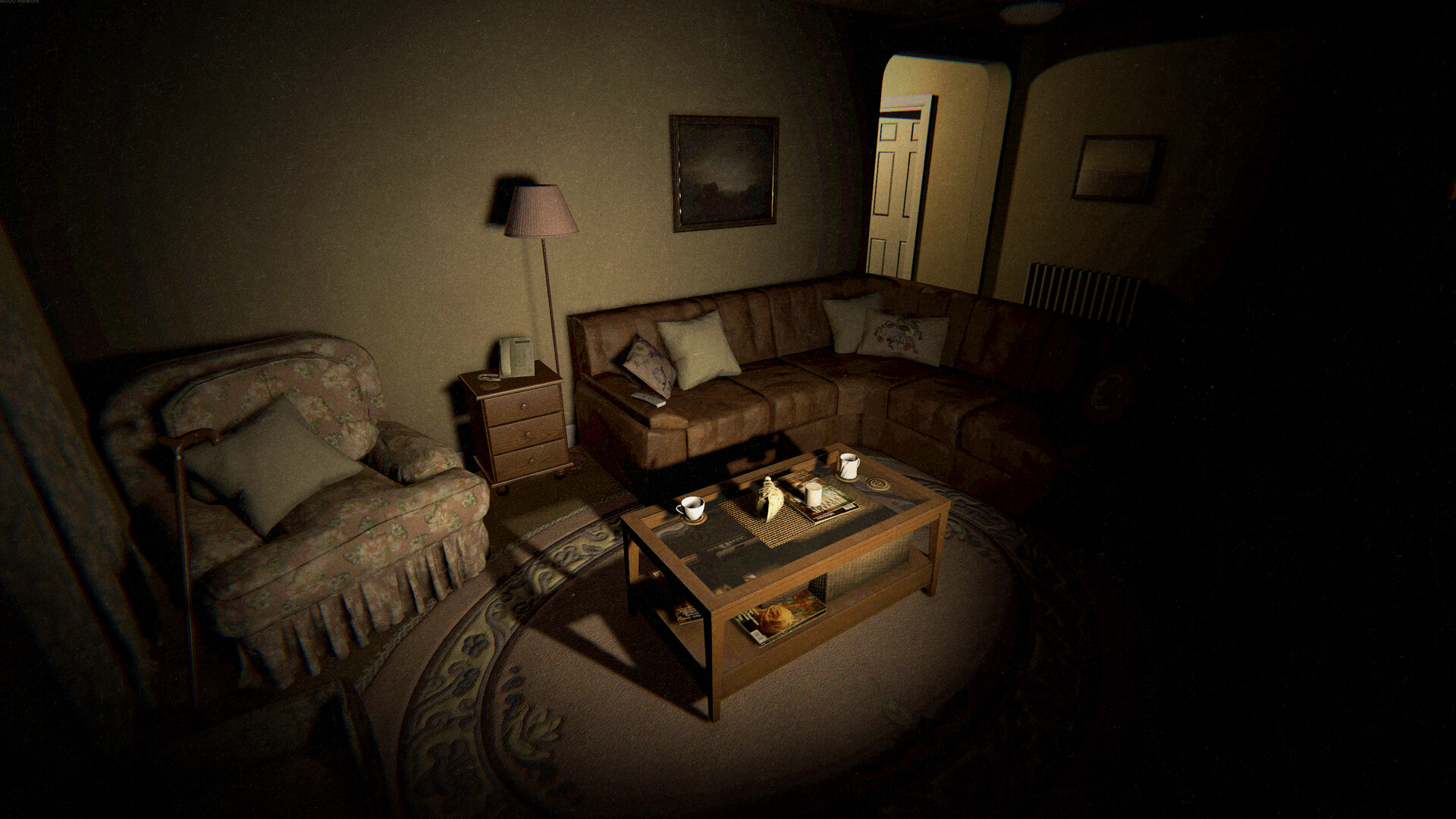
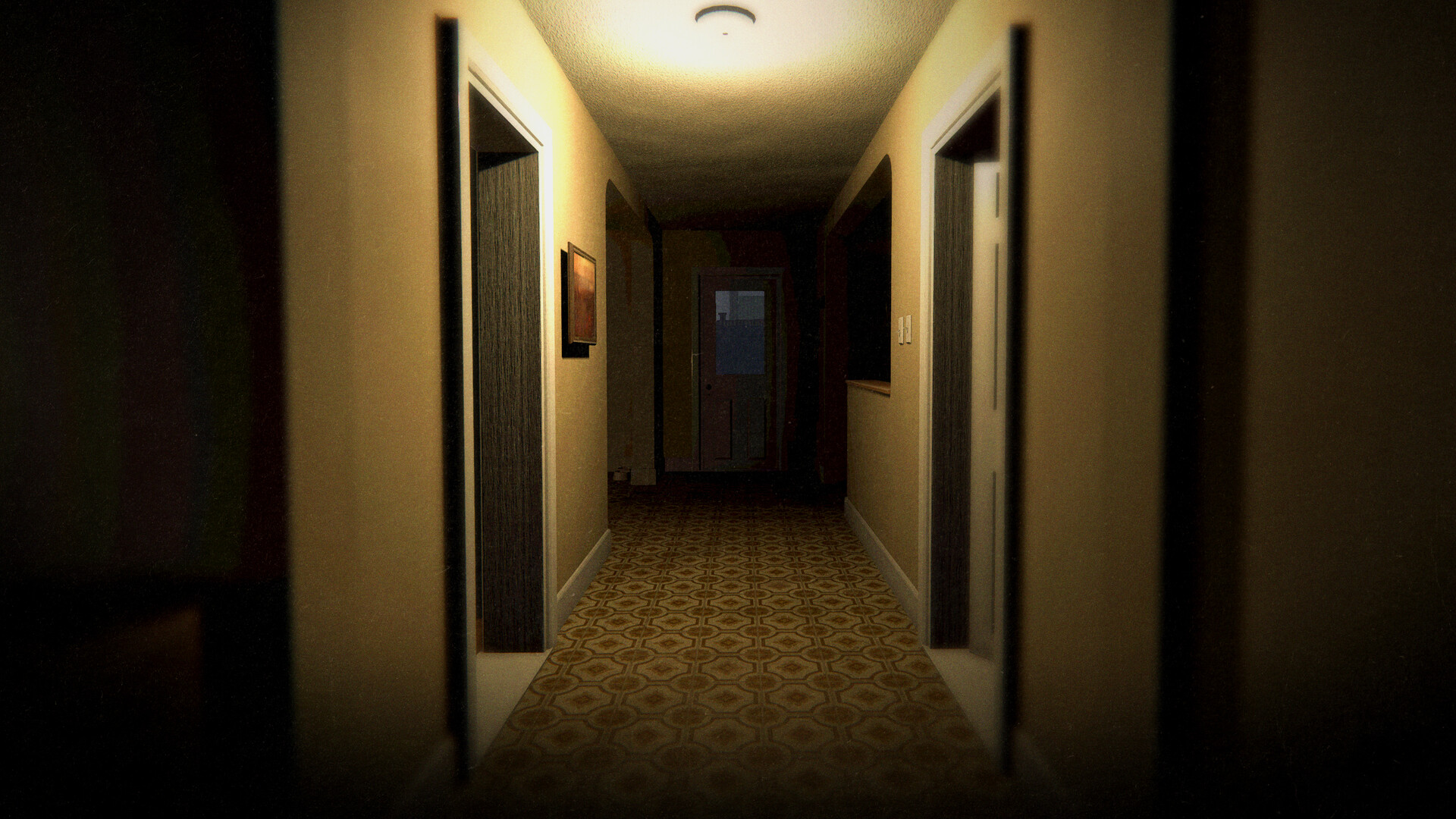
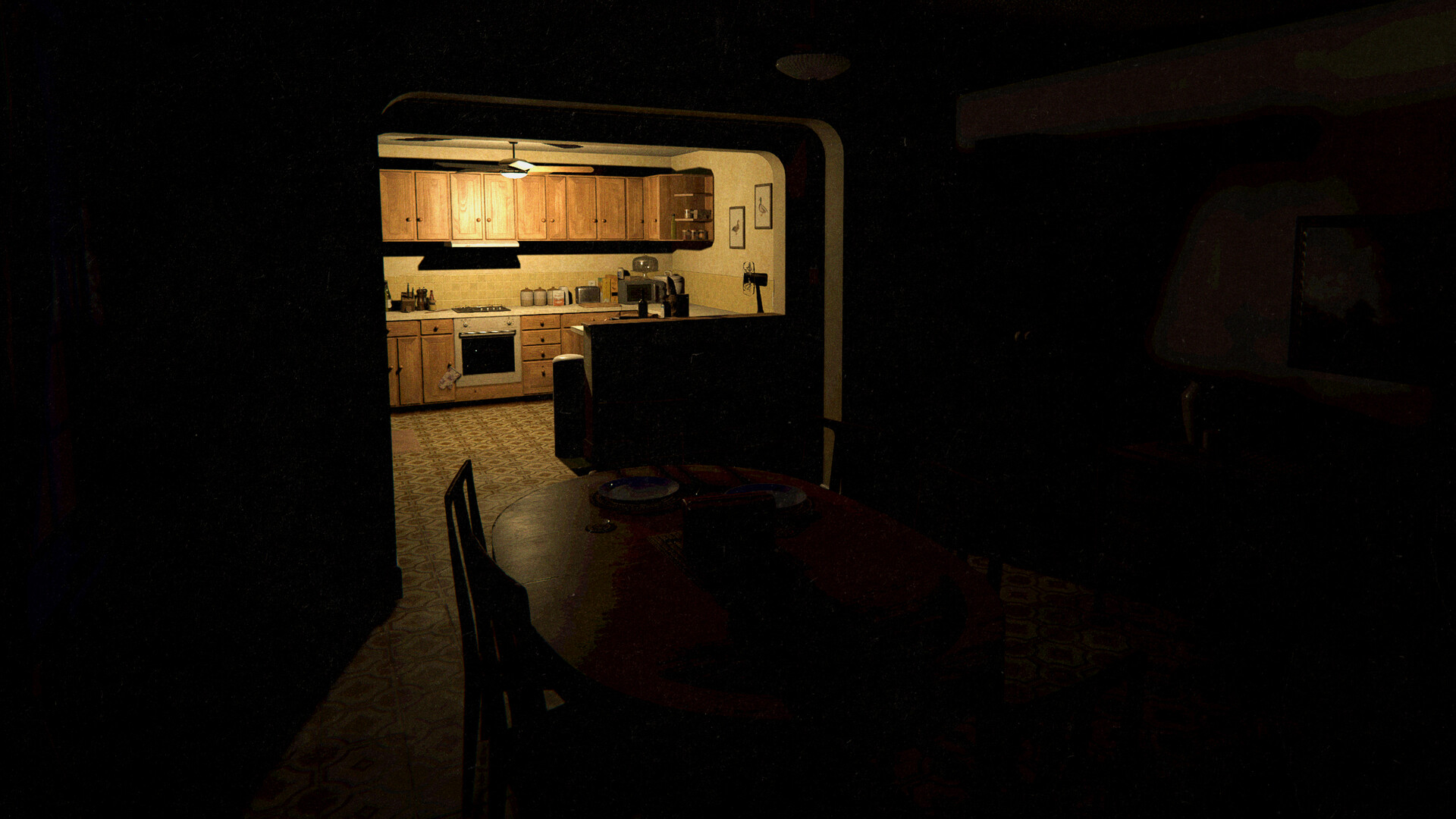
The setting is a nondescript modern-day somewhere, a mix of American suburbia and British interior design that never gets pinned to a map. Street addresses are specific (6 Tanglewood Drive, 42 Edgefield Road, 10 Ridgeview Court, 13 Willow Street) but the town isn’t. That vagueness works in the game’s favour. These are ordinary homes with laundry on the floor and toys on the stairs, and the ordinariness is what makes a cupboard door slamming on its own feel so wrong.
Over time Kinetic has expanded well past suburban houses. You can take a contract at two farmhouses, a summer campsite in daylight or at night, a prison, a high school, a sprawling mental institution and, since 2024, a lighthouse perched on a cliff called Point Hope.
| Location | Size | What it’s like |
|---|---|---|
| 6 Tanglewood Drive | Small | The tutorial house, one storey plus a basement |
| 42 Edgefield Road | Small | Three floors, lots of tight bedrooms |
| 10 Ridgeview Court | Small | Two storeys and a basement with long sightlines |
| 13 Willow Street | Small | Compact bungalow, nowhere to run |
| Grafton Farmhouse | Small | Old timber farmhouse, creaky and cramped |
| Bleasdale Farmhouse | Small | Two floors plus a dark attic |
| Camp Woodwind | Small | Outdoor tents, the gentlest map |
| Maple Lodge Campsite | Medium | Cabins and open ground, long walks in the rain |
| Prison | Medium | Cell blocks and a yard, very loud doors |
| Point Hope | Medium | Vertical lighthouse, a spiral you can’t escape |
| Brownstone High School | Large | Two floors of classrooms and lockers |
| Sunny Meadows Mental Institution | Large | Huge, with a Restricted cut-down version |
Map sizes matter because they set hunt length, how far you can get from the van, and how long you’ll be hunting for the ghost’s favourite room before your sanity gives out.
How it scares you
Most horror games scare you with what you see. Phasmophobia scares you with what you hear and what you don’t yet know. You arrive with a journal listing every ghost type and the three pieces of evidence each one leaves behind, and your job is detective work: gather enough evidence to narrow the list to one.
| Evidence | What detects it | What you’ll see |
|---|---|---|
| EMF Level 5 | EMF reader | The reader spikes to five near interactions |
| Spirit Box | Spirit box radio | The ghost answers your questions aloud |
| Ultraviolet | UV light or glowstick | Handprints on doors, footprints in salt |
| Ghost Orb | Video camera, night vision | Tiny floating orbs in the ghost room |
| Ghost Writing | Ghost writing book | Scrawl appears in a book left on the floor |
| Freezing Temperatures | Thermometer | Your breath fogs and the reading drops below zero |
| D.O.T.S. Projector | D.O.T.S. laser grid | A silhouette walks through the dots |
Every tool pulls you deeper in. The spirit box only works in the dark. The thermometer only tells you what you need if you stand still in the cold. The ghost writing book has to sit in the ghost room for a while, so someone has to go back and check it. The design keeps inventing reasons for you to walk into the one place you shouldn’t be.
Then there’s sanity. Every second you spend inside with the lights off, your sanity ticks down. Ghost events (a figure in a doorway, breath on your neck, every light in the house dying at once) take bigger chunks. Sanity pills bring it back, but you only get a few. Once the team’s average sanity drops below a threshold, the ghost can hunt.
A hunt is the jump-scare delivery system, and it’s brilliant. The front door locks. Lights flicker in a rhythm you learn to dread. The ghost appears physically and walks the house looking for you, and if it catches you the screen goes dark and you watch the rest of the match as a spectator. You can hide in a closet or locker, crouch behind a bed, or loop it around a kitchen island if you’ve got nerve. Crucifixes stop a hunt starting within a small radius. Incense makes the ghost lose you for a few seconds. None of it is reliable if you panic.
The voice recognition is the game’s masterstroke. The ghost hears your actual microphone. Say its name near its room and it gets angrier. Talk during a hunt and it finds you faster. Four friends who’ve spent the night laughing in the van learn to go dead silent the moment the flashlight starts to strobe, and that enforced silence is the scariest thing the game does.
The 24 ghost types each break the rules a little, which is where the learning curve lives. A Revenant crawls until it sees you, then sprints. A Deogen always knows where you are but slows to a shuffle when it gets close. A Phantom vanishes if you photograph it. A Mimic can behave like any other ghost. The Twins hunt from two places at once. Experienced players identify a ghost from hunt speed, door behaviour and spirit box quirks alone, and watching someone do that with zero evidence is the moment a newcomer realises how deep the systems go.
Difficulty scales hard. Amateur gives you five minutes of safe setup and all three pieces of evidence. By Nightmare the ghost hides one of its evidence types. Insanity hides two, kills your sanity restoration and turns every contract into a guessing game based on behaviour.
| Difficulty | Evidence shown | Setup time | Who it’s for |
|---|---|---|---|
| Amateur | 3 of 3 | 5 minutes | Your first few contracts |
| Intermediate | 3 of 3 | 2 minutes | Comfortable with the tools |
| Professional | 3 of 3 | None | Regular groups |
| Nightmare | 2 of 3 | None | You know the ghosts by behaviour |
| Insanity | 1 of 3 | None | Veterans chasing high multipliers |
| Custom | Your choice | Your choice | Build the ruleset you want |
Custom difficulty lets you adjust dozens of sliders, from ghost speed to how often the fuse box trips, so you can tune the fear up or down for a mixed group. There’s also a rotating weekly challenge mode with fixed rules and rewards if you want structure.
One honest caveat on the scare rating. Solo, with a headset, on a large map at night, this is a 5/5 for a lot of people. With four friends cracking jokes on Camp Woodwind in daylight, it’s closer to a 2/5 comedy. The game is as scary as the room you play it in.
Lore and ending
Spoiler warning
This section covers how a contract ends, the ghost journal lore, and what the game does and doesn’t explain about its world.
There is no ending. Phasmophobia is a loop, not a campaign, and as of October 2026 Kinetic has not added any story mode. A contract ends when you identify the ghost correctly (or wrongly) in the journal and walk out, or when every investigator is dead. You earn money and XP, spend the money on better tiers of equipment, and go again. Progression resets when you prestige, with a new badge next to your name as the only trophy.
What lore exists lives in two places. The first is the journal, which gives each ghost a short description rooted in real folklore: the Banshee as a singing hunter who fixates on a single target, the Jinn as a territorial spirit that draws power from the house’s electricity, the Yurei as a Japanese ghost with a grudge, the Hantu from Malaysian tradition that moves faster the colder it gets. The entries are short and mostly serve as gameplay hints dressed as myth, but reading them is how most players first learn that a Mare hates the lights or that an Obake leaves a six-fingered handprint.
The second is environmental. Every house tells a quiet story through set dressing. Children’s bedrooms on maps where the ghost turns out to be a Thaye, which ages and weakens the longer you’re inside. Bloodstained mattresses in Sunny Meadows. The keeper’s cottage at Point Hope, where the stairs seem to go up forever and the ghost’s favourite room is often somewhere that makes the climb back down terrifying. None of this is explained in text and the game never tells you who your employer is, why the whiteboard objectives change, or what happens to a dead investigator after the van drives away. Kinetic has leaned into that silence rather than filling it, which suits the game. The horror is yours, not a character’s.
Seasonal events add temporary flavour, usually around Halloween, with special objectives and cosmetic rewards, but they don’t build toward a canon. If you want a plot, this isn’t the game. If you want to invent one with your friends at 2am while hiding in a locker, it’s perfect.
Where to play
Phasmophobia started as a Windows-only Steam title and stayed that way for four years before the console launch on 29 October 2024. As of October 2026 you can play it on:
| Platform | Store | Notes |
|---|---|---|
| Windows PC | Steam | $19.99, Early Access, SteamVR supported |
| PlayStation 5 | PlayStation Store | Paid, not a PS Plus catalogue title |
| PlayStation VR2 | PlayStation Store | Same purchase as the PS5 version |
| Xbox Series X and S | Microsoft Store | Paid, not on Game Pass |
Crossplay works between all of those, so a PC player can host a lobby with friends on PS5 and Xbox, and VR players share lobbies with flat-screen players. You link a Kinetic Games account to carry progress between platforms.
The Steam version is the one most people own. It’s $19.99 at full price and regularly shows up in bundles with other indie co-op horror games such as Escape the Backrooms and Chained Together, and in the occasional Steam sale. It still carries the Early Access label because Kinetic has not shipped a 1.0, though the game has been feature-complete enough to recommend for years. There’s no Mac or Linux build and no Switch version.
On Steam Deck it runs, but check the current compatibility badge before you buy for the Deck specifically. The microphone-driven features work with the Deck’s built-in mic and the game is playable, though the small screen and the need to type nothing but talk constantly makes it a worse experience than a desktop with a headset.
Whatever platform you pick, use a headset with a decent microphone. Push-to-talk is an option, but the ghost’s ability to hear you is half the game and it works best when you leave the mic open and learn to shut up.
If you liked this
Lethal Company for the same four-player voice-chat chaos with a workplace comedy edge.
Demonologist for a closer imitation of the investigation loop with a stronger emphasis on visual horror.
The Outlast Trials for co-op horror that trades detective work for being hunted through much bigger, nastier spaces.
FAQ
What does Phasmophobia mean?
Phasmophobia is the clinical term for a fear of ghosts, built from the Greek words phasma (apparition) and phobos (fear). It’s a real recognised phobia, usually grouped with fears of the supernatural rather than treated as a standalone diagnosis. The game’s name is a small joke: the thing you’re being hired to investigate is the thing the title says you’re afraid of.
Is Phasmophobia OK for a 12 year old?
There’s no gore and no violence beyond the ghost grabbing you, and the only language comes from whatever players say on voice chat. The actual issue is intensity. Hunts are loud, dark and genuinely frightening, and a lot of adults bounce off the game because of them. For a 12 year old who already enjoys scary films and will be playing with people they know, it’s manageable on Amateur with the lights on. The bigger thing to watch is open lobbies with strangers, where you can’t control the chat.
Is Phasmophobia free on PS5?
No. Phasmophobia is a paid purchase on the PlayStation Store, and as of October 2026 it has not been part of the PlayStation Plus monthly games or the Extra catalogue. The PS5 purchase also covers the PS VR2 version, so you don’t pay twice to play it in VR.
Is Phasmophobia on Xbox free?
No. The Xbox Series X and S version is a standard paid purchase from the Microsoft Store and is not on Game Pass as of October 2026. If you see it listed as free anywhere, it’s either a sale glitch or a scam. The price lines up with the $19.99 Steam version.
Can you play Phasmophobia alone?
Yes, and solo is the scariest way to play it. The ghost scales nothing down for you, hunts last just as long, and nobody is in the van watching the cameras. Solo is also where you learn the ghost types fastest, because every piece of evidence is yours to find. Just expect to leave a few contracts early.